

Rogers Pass Howitzers End Is Approaching

Rogers Pass howitzers are entering what could be their final winter of avalanche-control operations, with the Canadian Armed Forces scheduled to end its partnership with Parks Canada in August 2027. After more than six decades of military artillery protecting Canada’s busiest mountain transportation corridor, the deadline for establishing a replacement is approaching.
The Department of National Defence confirmed that it will not renew the existing agreement, citing military modernization priorities and the retirement of legacy artillery systems.
The announcement raises a critical question: Will Parks Canada have an equally effective avalanche-control system operating before the military withdraws?
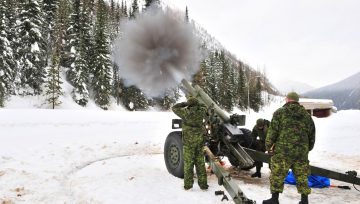
Parks Canada has announced that East Rogers will close November 4–7 for a verification shoot involving the Canadian Armed Forces and its 105 mm howitzers. Intermittent Trans-Canada Highway closures will also be required.
The annual exercise confirms the accuracy of the artillery used under Operation PALACI, which has operated in Rogers Pass since 1961.
The scale of the operation is substantial. According to Parks Canada, artillery is used to manage 135 avalanche paths and approximately 270 registered targets along the highway corridor. The howitzers can reach starting zones up to five kilometres away and 1,800 vertical metres above the highway.
During an extraordinary atmospheric river event in March 2026, Parks Canada conducted four avalanche-control missions, firing 271 artillery rounds over five days. The highway was able to reopen daily despite prolonged avalanche conditions.
The event demonstrated the operational capacity that any replacement system must match.
British Columbia’s Ministry of Transportation and Transit has already expressed concern that the military withdrawal could substantially increase highway closure durations.
The Rogers Pass corridor carries approximately $65 million in commercial goods daily, making reliable avalanche control critical to Canada’s transportation network.
Parks Canada and the Department of National Defence have acknowledged that transition discussions are underway. However, a comprehensive replacement strategy, implementation schedule and operational readiness assessment have not been publicly detailed in the sources reviewed.
With the 2026–27 winter underway, there is limited time remaining to establish and validate a replacement before August 2027.

Why Haven’t Drones Replaced the Howitzers? Drone-based avalanche control is progressing rapidly, including in Canada’s national parks.
Canadian company AVSS successfully conducted live-explosive drone trials in Jasper National Park during February and March 2026, working with federal agencies including Parks Canada and the Department of National Defence.
Research presented at the 2026 International Snow Science Workshop demonstrated accurate explosive delivery, reliable deployment and the potential to reduce personnel exposure.
Remote Avalanche Control Systems are also delivering measurable results. At Three Valley Gap, west of Revelstoke, a decade of operations with remotely triggered explosive systems reduced average annual highway closure hours by 44%.
The technology clearly offers alternatives to traditional artillery.
However, Rogers Pass presents exceptional operational demands. Drones face limitations involving wind, visibility, endurance and explosive payload capacity. Fixed remote systems require infrastructure across a vast network of avalanche starting zones.
The challenge isn’t whether modern avalanche-control technology works. It is whether a combination of these systems can replace the reach, speed, capacity and all-weather reliability of the existing artillery program.
What Happens After August 2027?
For backcountry skiers, the transition raises additional questions about terrain access, avalanche-control scheduling and the future operation of the Winter Permit System.
Parks Canada’s artillery program is designed to protect highway and railway traffic, not to make backcountry slopes safe for skiing. Nevertheless, its operating procedures have shaped access to some of Canada’s finest ski-touring terrain for decades.
A replacement system will need to maintain protection for transportation infrastructure while establishing clear procedures for managing recreational access.
The Canadian Armed Forces has set its deadline. Modern avalanche-control technology is advancing, and alternatives are already being tested.
What remains unclear is whether Parks Canada can complete the transition before the Rogers Pass howitzers fall silent in August 2027.
The approaching deadline deserves more than another winter of verification shoots. It requires a clearly communicated plan for what comes next.
Editor




Comments