

Echoes on the Wind: Fifty Years of Backcountry Search and Rescue
[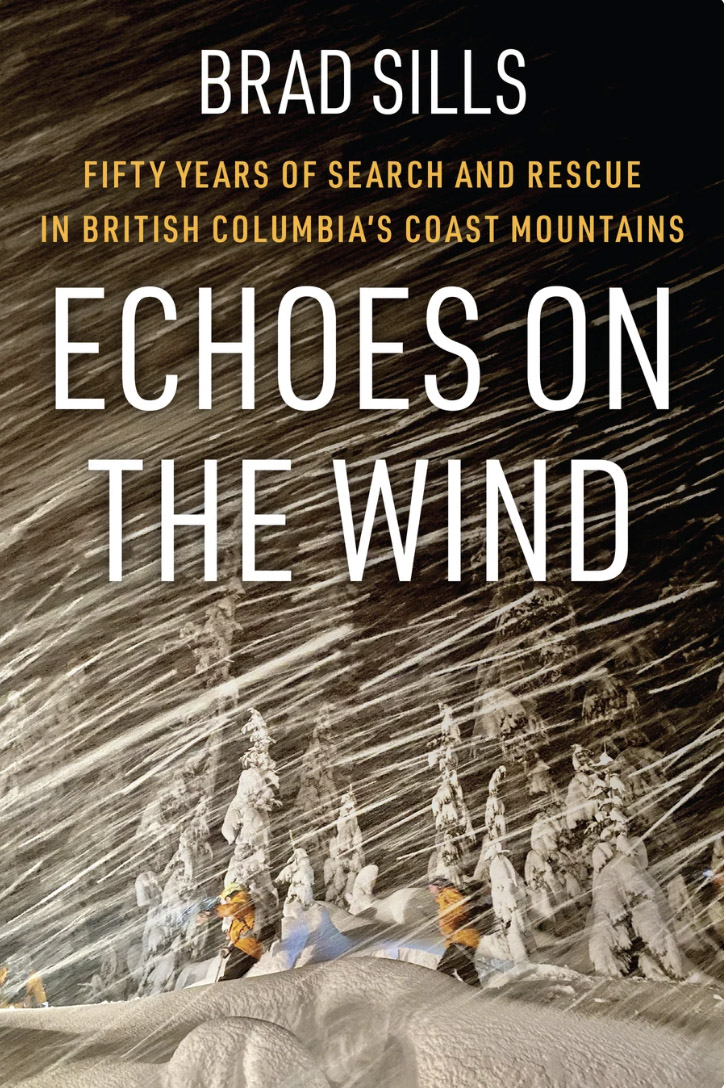
Echoes on the Wind takes readers behind the scenes of 50 years of search and rescue in British Columbia’s Coast Mountains, revealing the extraordinary challenges, difficult decisions and personal experiences of the volunteers who respond when backcountry adventures go wrong.
Brad Sills has been involved with Whistler Search and Rescue since 1976. Over five decades, he has witnessed the evolution of mountain rescue from a small volunteer operation into a sophisticated emergency response service. His new memoir, Echoes on the Wind: Fifty Years of Search and Rescue in British Columbia’s Coast Mountains, shares 15 remarkable accounts of survival, tragedy and the people who dedicate their lives to helping others.
For anyone who spends time in the backcountry, this is a fascinating opportunity to see the mountains from a perspective few ever experience.
When the Rescuer Needs Rescuing
One of Sills’ most memorable experiences occurred during a 2007 rescue operation near Theta Lake on Mount Seymour.
While supporting an avalanche stabilization team, the slope beneath his skis released. Sills was swept over a waterfall, lost his skis and pack, and narrowly escaped being carried over a 100-metre drop.
He survived by centimetres.
The incident left a lasting impression. Even after decades of rescue experience, Sills found himself confronting the same unpredictable mountain hazards that had brought his team there in the first place.
It’s one of the experiences that gives his writing a particularly valuable perspective. Search and rescue volunteers face real risks, often under circumstances far more complicated than those encountered during a recreational day in the mountains.
Fifty Years of Experience, Fifteen Remarkable Stories
The book reaches well beyond avalanche rescue. Sills recounts searches for missing hikers, emergencies involving kayakers, technical rescues and operations that extend over days or even weeks.
Each mission presents its own challenges. Teams must weigh the urgency of reaching someone in trouble against weather, terrain, available resources and the safety of their own members.
Over the course of Sills’ career, the techniques and technology available to rescuers have changed dramatically. Helicopter operations, communications, training and coordinated response systems have become increasingly sophisticated.
Sills was directly involved in many of those developments, including authoring the BC Search and Rescue Association’s Helicopter Operations Training Program and helping shape provincial air rescue practices.
His experience provides a fascinating historical account of how BC’s volunteer search and rescue system developed alongside the growing popularity of backcountry recreation.
The People Behind the Rescue Stories
One of the book’s most powerful endorsements comes from Simon Fraser University professor Sam Black, who was rescued by Sills’ team after spending a week lost near Brandywine Glacier in 2004.
Black describes the book as an extraordinary account of generosity, reflecting on his own survival and the people whose backcountry experiences ended in tragedy.
His story underscores an important theme throughout the memoir. Behind every search are people with families, friends and lives that can change dramatically in a matter of moments.
And behind every rescue are volunteers who leave their own families and responsibilities to help complete strangers.
Sills explores what motivates those volunteers, the lasting emotional impact of unsuccessful missions and the extraordinary commitment required to sustain search and rescue services over generations.
Essential Reading for Backcountry Travellers
Although Whistler and the Coast Mountains provide the backdrop, the experiences in Echoes on the Wind are relevant wherever people venture into remote terrain.
From the Rockies to the Selkirks, from alpine ski tours to wilderness paddling expeditions, backcountry travellers operate in environments where changing conditions, unexpected injuries and seemingly minor decisions can have serious consequences.
What makes this book particularly interesting is the opportunity to understand the rescue response from the other side.
Experienced backcountry travellers know their own close calls and the decisions they’ve made in difficult situations. Sills offers a rare look at the decisions rescuers face when someone else’s survival depends on their judgment.
It’s not a substitute for mountain safety training or experience. Instead, it’s an opportunity to better understand the consequences of backcountry incidents and the remarkable people who respond when help is needed.
A Worthwhile Addition to Every Backcountry Library
Adventure books typically celebrate successful expeditions, ambitious objectives and remarkable achievements. Echoes on the Wind tells another side of the story—the moments when an adventure takes an unexpected turn, and the people who answer the call.
It’s a compelling combination of mountain history, real-life rescue accounts and personal reflection, told by someone who has spent half a century at the centre of it all.
For skiers, snowboarders, climbers, hikers, paddlers and everyone who values time in wild places, this is a book worth reading and sharing.






Comments