
Rain Forest Powder In Another Time

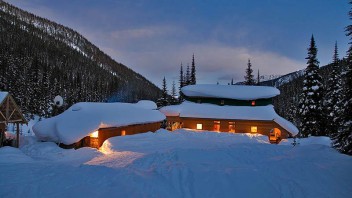
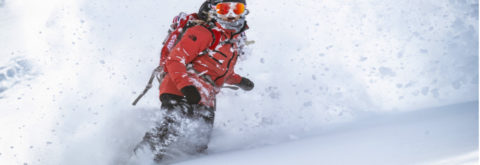
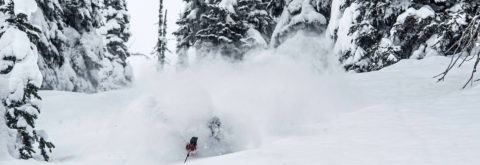
Powder should not exist in a Rain Forest and time travel is impossible. My how one’s perception can change with a visit to Mount Cain on Vancouver Island where the impossible is true and time stands still.

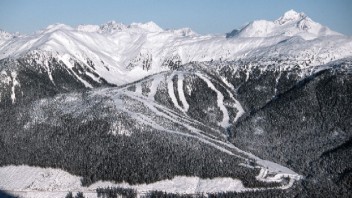
We all know that T-bars are out of favour, especially for boarders, and resorts have gotten rid of them? Wrong. To begin with Mount Cain is not a resort, it’s a ski hill and yes, there are only T-bars and they are nice and slow and ensure the powder doesn’t get skied out!

Out houses, do resorts have out houses in the base area? No. But ski hills did years ago and places like Fernie still have out-houses in the Alpine and Mt Cain has many. Skier visits are 7000 and that’s for the year, right? Wrong. 7000 visits is for the season which averages about 170 skiers per day on Saturday and Sunday, the only days the ski-hill is open other than holidays. Aussies serving lifts, NO. The lifties are all volunteers as are all of the other work positions. The ski-hill is operated as a not-for-profit society for the surrounding communities and families in the North Island.

My friend Adam who is a employee at Whistler called Mount Cain the “anti-resort” and yes it does not meet any definition of resort, which is a good thing for some. My urban friends took their kids to Mount Cain and they vomited at the smell of an out-house and felt threatened by the local trailer park. I grew up in Eastern Canada with grandparents who only had an outhouse and ski-hills which had trailers and home made lifts. Today’s kids are growing up with Whistler as a standard: valet parking and sushi everywhere. I questions the expectations and values our children are developing at our swanky resorts.

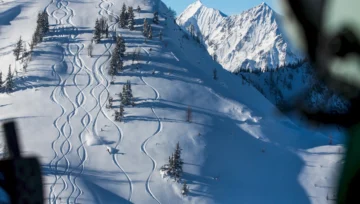
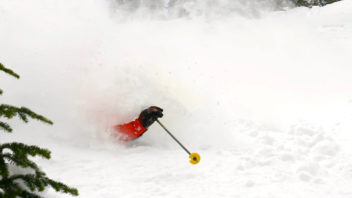
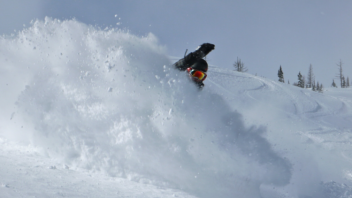
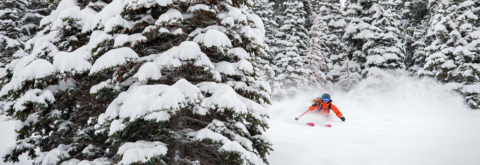
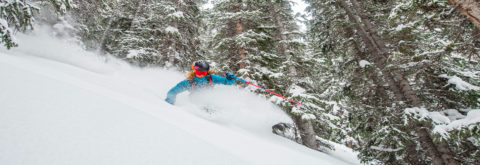
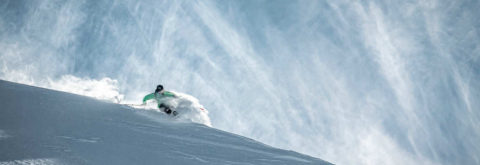
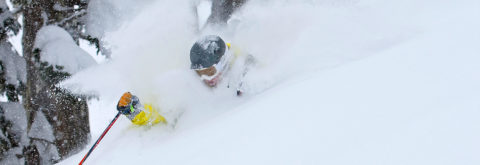
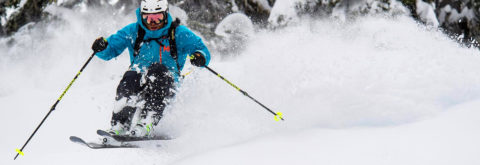
Mount Cain’s tag line is “The Best Powder On The Island” and it is. It could be tagged the only powder on the island. With only 170 day skiers the powder lasts and when is snows mid-week nobody is there to track it out. And when the snow does get tracked, simply traverse to another bowl and hike out. Don’t expect the deep and dry of the Rockies however is is decent by a Rain Forest standard.

In my opinion Mount Cain is not for everyone however those who do get to go there are in for a very special treat. It’s a skiers mountain with great terrain and a decent snow pack. For a look at the roots of our favourite pastime and great skiing I highly recommend the trip “up-island” as the locals would say!

photos by S. Fowler

click here for website

Fernie: The Legend Is Real

As I drove through a seemingly endless thick fog layer on Hwy 3 I reminisced my many powder days in Fernie and wished for good fortune on my current adventure. These memories helped justify driving past the many ski operations between the Coast and Fernie. They included the all-mighty Whistler, the interiors many ski hills and the Powder Highway’s mega collection of powder options. Being ensured powder is always a gamble however I knew that Fernie would be the most reliable choice, as always.

My powder adventures in Fernie began in the early 90’s at Fernie Snow Valley and Island Lake Lodge, the local snow-cat operation. I skied the many powder bowls on my “210’s” and immensely enjoyed the terrain. In those years powder was not a commodity, it was plentiful and ironically, most vacationers wanted groomed corduroy. The skiing public had not experienced the pleasure of powder; it could be painful on long skinny skis. In was during the 90’s that the invention of fat skis make powder skiing enjoyable for all. There also was the invention and proliferation of snowboards that were created specifically for surfing POW. As if overnight, everyone started playing in the powder.

Fast track to global warming or whatever is affecting our snow quantity, coupled with the masses looking for that floaty powder turn; powder had become the skier’s commodity. Fancy lifts and big vertical were available everywhere however powder had become the new sought-after. That was when Fernie became a whispered name, a secret among friends, and a destination for core powder riders. In those years Fernie didn’t attract many shoppers or foodies other than the spouses of the true powder seekers.

Fernie’s ski history changed shortly after being discovered by powder seekers. Locally owned Fernie Snow Valley was purchased by a resort tycoon from Calgary and soon renamed Fernie Alpine Resort. Three new bowls were opened with two new lifts and condo’s shot up everywhere. Fernie locals were concerned that their powder days were numbered. Skier traffic increased but fortunately the new lifts spread it over more terrain and preserved the wilderness powder experience.

The powder that made Fernie this haven is produced by storm systems that develop in the Pacific Ocean, off the coast of Northern Oregon. The predominant Southwesterly flow chugs across the near desert like terrain of central Washington and Idaho before slamming into the Lizard Range of the Canadian Rockies. A lack of significant mountain ranges between Fernie and the coast ensures that the storm arrives with a full payload of dry powder. Once the system reaches Fernie it seems to churn like a great spinning vortex dumping powder throughout the entire area. Storm systems can come overnight and in the past, have dropped as much as 100 centimetres before morning. A good storm cycle grinds for up to four continuous days before dissipating, usually to be followed by sunshine and then the next cycle.

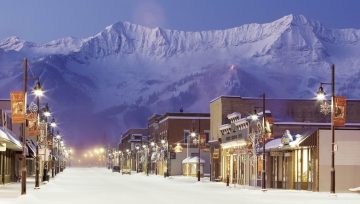
After midnight I pulled into Fernie’s Park Place Lodge, a locally owned boutique hotel in the heart of the town, and had a good nights sleep. The sound of pro-patrollers launching avalanche bombs was a great way to begin my day. In my many years of skiing Fernie I know many skiers and with a few phone calls I had a group of locals to ski with, and that we did.

Run after run of untracked powder was awaiting us–steep lines in open bowls and through perfectly spaced trees. Lizard Bowl, Easter Bowl, Curry Bowl, Cedar Bowl, and Fish Bowl filled our days, and day after day the great skiing continued. Fernie has the goods, time and time again; the legend is real. I look forward to my next powder trip to Fernie!

250,000 Acres and Growing

Mica Heliskiing has announced the opening of another 3700 acres (1500 hectares) of new ski terrain within their 250,000 acre operating area.

Mica Heliskiing’s 2010 guests will have the opportunity to make first-descents in some of the best tree skiing on the planet! “Mica Heliskiing is very excited to provide this season’s guests with a number of classic, new ski lines”, says Paul Norrie, President of Mica Heliskiing. “The combined size of these ski runs is larger than most ski resorts and offers beautiful, naturally gladed, steep tree skiing. Our guests are going to be thrilled!”

“One circling gaze from the top of a run near 11,000-foot Mt. Clemenceau unviels elements of the Swiss Alps, Alaska, the Coast Range and Himalayas - in short, ski terrain that blows the doors off anything else, anywhere else.”
Les Anthony, Powder Dude

Their terrain is definitely a major factor in what makes Mica Heliskiing so special! Mother Nature has blessed the region with natural steep fall-line tree runs, countless pillow lines, dramatic alpine ridges and bowls and endless glacier runs. With eight distinct main valleys and runs between 600 and 1800 vertical meters (1900 – 5900 feet), there’s something for everyone!

Mica Heliskiing’s tenure encompasses approximately 72,000 hectares on the western slopes of the Rocky Mountains in British Columbia, Canada. This spectacular area lies precisely where the moisture laden air from the Pacific Ocean collides with the cooler, dryer arctic air mass of the Canadian Rockies ice fields. The result is consistently deep, dry powder from early December through the end of April, with between 13 – 20 meters (42 – 66 feet) of annual snowfall!

Mica Heli Skiing near Revelstoke, B.C. is 100% small group heliskiing, one of three operations in The Island Lake Resort Group; the others being Powder Cowboy Catskiing and Island Lake Lodge near Fernie BC. For more information contact Darryn Shewchuk at 1.877.837.6191 x2002.

Inside K2’s Design Process

Design and innovation strategy at Seattle-based winter gear manufacturer K2 focuses on harnessing ideas from employees and sponsored athletes.

To understand the design process at K2, the largest seller of skis in the U.S., consider its relationship with Shane McConkey. One of the world’s most talented and colorful extreme skiers before his death in a ski accident last March, McConkey changed the way K2, and ultimately most of its rivals, makes skis.

Shane

It started shortly after K2 began endorsing McConkey in 2004. The company brought him to Whistler, B.C., on a junket to ski with its retail partners. But rather than merely glad hand and promote K2’s latest product line, McConkey wanted to sell an entirely new idea in ski design. He believed skis that curved up at the tips and tails— a design that would come to be known as “rocker”— made powder skiing much easier. So before he took to the slopes that day, he grabbed a piece of wire, ran it around the rivets in the tips of his K2 skis, and cinched it tight around the toe piece of his binding. The rigging pulled the tip skyward. On his makeshift skis, McConkey floated down the mountain. “Point was made,” says K2’s global brand manager Jeff Mechura. “He was a believer in these things.”

What defines K2, though, is that it became a believer too. Other companies might have dismissed the stunt as the wacky gimmickry of a skier who’s jumped off one too many cliffs. But K2 was willing to listen, willing to rethink the conventional wisdom of ski design.

And McConkey gave them an earful. He didn’t just want the rocker; he wanted the skis to be wide, much wider at the tips and underfoot than anything on the market at the time. Within weeks, McConkey was shooting Mechura page after page of ski designs. They included detailed drawings of skis with width and length measurements that would make engineers proud. Alongside those drawings were notes describing his vision. “I think it’s important that the tail is the narrowest part of the ski,” McConkey wrote in one memo, concluding, “I could keep writing for pages more.”

Within a year, the K2 Pontoon hit the market. K2 won’t break out specifics, but in a business where ski models change as frequently as weather patterns, the Pontoon has remained in the stable of K2 skis for five seasons. This year the company is selling a limited edition version of the ski, with all proceeds going to McConkey’s family.

For K2, this is how innovation gets done. The company listens to its athletes and pushes them to push the company. It challenges its staff, many of whom are expert skiers and snowboarders, to challenge convention. “We’ll try anything once,” Mechura says.

It’s not unusual, of course, for ski and snowboard companies to sponsor athletes and even solicit their ideas. Snowboard maker Burton has Winter X Games icon Shaun White in its stable. Olympic gold medalist Ted Ligety skis for Rossignol. The lists goes on and on. And each company, to varying degrees, gets design insights from its athletes. It’s a strategy they all promote.

But McConkey’s pushing K2 to challenge convention is in keeping with the Seattle-based company’s heritage. K2 started in the 1960s as one of the first firms to use fiberglass to make skis. In 1995 it was the first company to sell shaped skis, the hourglass-looking designs that made carving turns a snap.

The K2 Four skis became the best-selling ski of the era and led the industry to embrace side-cut designs. The same year K2 Snowboards was the first company to use a step-in binding system called “The Clicker.” And “rocker”, unheard of in ski design just a few years ago, is now part of the marketing lexicon of the industry, with similar designs showing up from rival ski makers.

K2 is part of the Jarden (JAH) conglomerate that includes such household name as Mr. Coffee appliances, Bicycle playing cards, and Rawlings sporting goods. K2, with some 450 employees worldwide, amounts to just a piece of Jarden, which rang up $3.8 billion in sales in the first nine months of 2009. But Charlie Strauzer, senior managing director of CJS Securities in White Plains, N.Y., who follows Jarden, says that K2’s breakthroughs have allowed the company to outpace rivals, even in a down economy. “While their sales are down year-over-year, they’re taking share from competitors,” Strauzer says.

Two winters ago, Peter Pontano, a binding engineer for Ride, the snowboard company owned by K2, was testing some new designs at Mt. Hood in Oregon. While on a lift up the mountain, the top strap to his board binding fell off, leaving him to snowboard down without it. Much to his surprise, the run was fine, except for the heel-side turns when his toes swung out. It got him thinking about reducing the binding weight by holding the toe in place with the least material possible.

That was the genesis of the Ride ContraBand, a binding that uses two plastic straps to hold the toe in place and is roughly 20% lighter than its predecessor. “We encourage our staff to get out as often as possible,” says Scott Mavis, Ride’s brand director. “A lot of our ideas come from that.” No need for focus groups when the athletes who work for the company are free to innovate.

Mount Cain

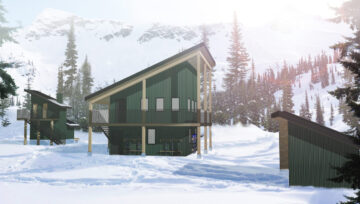
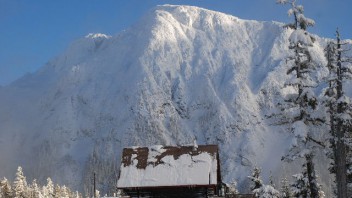
Situated on the north end of Vancouver Island, Mount Cain offers a unique experience to skiers, snowboarders and backcountry explorers. At Mount Cain you’ll find untouched powder (they’re only open on weekends and mondays), virtually no line-ups and the welcoming atmosphere of a family oriented mountain. This is a place like most ski hills were before being gentrified by resort oriented urban folk. Unlike Whistler, Mount Washington or countless other fancy resorts - this is an authentic and special place.

Mt. Cain is located in Schoen Lake regional park and is run by the Mt. Cain Alpine Park Society.

It is Vancouver Island’s only community owned and operated ski-hill!

click here for website

Whistler Blackcomb Tops Lists - 13 Years and Counting

For the 13th year in a row, readers at one of North America’s premier ski magazines, SKIING, have ranked Whistler Blackcomb their choice for No. 1 resort and the resort they want to ski more than anywhere else. FREESKIER Magazine has also ranked Whistler Blackcomb No. 1, and in SKI Magazine, the resort has moved up one spot to the No. 2 position.

“We are thrilled to be on top again this year. These rankings reflect an appreciation of the unwavering commitment from our staff and the community to deliver the most incredible mountain resort experience on the planet,” says Dave Brownlie, president and chief operating officer at Whistler Blackcomb. “We are extremely fortunate to be blessed with the incredible physical attributes that our mountains offer – their size, scope and variety of terrain tops the rankings every year. Add to that a dedicated and passionate group of employees providing an exceptional guest experience, as well as the innovation of the record-breaking PEAK 2 PEAK Gondola, and it obviously all has an impact on our guests and those who aspire to ski here.”

The annual magazine rankings rate resorts on a variety of set criteria, and Whistler Blackcomb consistently scores high in what the results cite as the resort’s greatest attributes. Terrain quality and variety always top the charts, referring to Whistler Blackcomb’s 8,171 acres of glaciers, alpine bowls, steeps and cliffs, plenty of tree skiing, and long, wide-open runs snaking down a vertical mile on both mountains.

“It’s a poll of our readers, not the editors. And the readers overwhelmingly chose Whistler,” says Jake Bogoch, editor of SKIING Magazine. “When our readers think of Whistler, they think of dark storms, granite-lined bowls, blocky cliffs, and long, long runs. That’s why they want to go there more than anywhere else.”

In addition to the terrain variety, nightlife and après ski activities always rank high. The après and nightlife scenes in Whistler Village are legendary, and it all takes place only steps from the base of the mountains. “Whistler exudes an energy that is difficult to replicate anywhere else, and guests love it, citing it as one of the key reasons they come back year after year,” continues Brownlie.

With the resort on the cusp of hosting the world as a proud venue for the 2010 Olympic and Paralympic Winter Games, this could be the beginning of the most defining year yet. Whistler Blackcomb is open throughout the winter, with 90 per cent of its 8,171 acres of terrain available throughout the Games, accessed from three of the four base areas. Early booking offers provide opportunities to save up to 39 per cent on a vacation package this winter, and includes a best price guarantee for those concerned about committing early. If guests find a better deal later in the season, Whistler Blackcomb will take care of the difference.

Whistler Blackcomb’s official opening day is November 26, 2009. Follow weather forecasts and snow conditions, as well as information about visiting Whistler Blackcomb this winter, including package prices and Olympic travel information, at www.whistlerblackcomb.com or by calling 1-800-766-0449.

Consistently ranked as North America’s top ski and snowboard resort, Whistler Blackcomb gets ready to welcome the world in 2010 as a host venue for the Olympic and Paralympic Winter Games. With uninterrupted skiing, riding and sightseeing available throughout the winter, season two of the highly acclaimed PEAK 2 PEAK Gondola, and the best deals of the season guaranteed before November 15, Whistler Blackcomb continues to raise the level of mountain excitement for its guests. Located a scenic two-hour drive north of Vancouver, Canada up the spectacular, newly-finished Sea to Sky Highway, this resort is home to Whistler and Blackcomb mountains, which boast one vertical mile of incredible skiing and riding. With over 16 alpine bowls, three glaciers, 200 trails, and 8,171 acres of skiable terrain, the choices of where and what to ski/ride at Whistler Blackcomb from beginner to advanced terrain are staggering. Joined at the base by a vibrant pedestrian village filled with award-winning après bars, restaurants, patios, cafes, shops, galleries and spas, and surrounded by breathtaking scenery, this four-season resort is spectacular. For more information, visit www.whistlerblackcomb.com.

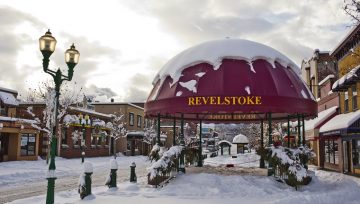
The Biggest One: Revelstoke

Is bigger always better? Investors pouring a billion dollars into B.C.’s Revelstoke Mountain Resort think so. One writer explores what just might become the continent’s largest ski resort and answers the question on everyone’s mind: Go now or wait it out?

The mountain finally breaks me. Some 5,620 vertical feet after I disembark the highest chairlift at the new Revelstoke Mountain Resort—after I bebop through the timberline krummholz on Clyde’s Secret, swing through evergreens wearing wizards’ caps of snow along Snow Rodeo’s fringe, then roar downhill in my best thigh-burning Bode mode for what seems like forever—only then do I run into the mogul field.

Now my quivering legs have a question: How can there possibly be more? The sanctuary of the base lodge is still nowhere in sight; by my best guess it’s another couple of thousand feet below—making Revelstoke’s vertical drop the longest on the continent. “Well, this comes a bit late,” I manage to sputter to the guy standing next to me.

“I can’t keep up with this place,” he wheezes back. Eventually we both push off down the run, called Pitch Black, skiing as elegantly as overcooked noodles toward the lodge we cannot see. I’ll spot him there later, his feet up on a chair, too pooped to hurry back out.

A packing note if you’re headed to Canada’s newest ski resort: Bring an extra set of legs and a knapsack full of wonder. At a time when many are seriously questioning skiing’s prospects—whether because of global warming concerns or the graying of the baby boomers—Revelstoke Mountain Resort has jumped into the field with both feet. And unlike the other newcomers—Tamarack, Idaho; Moonlight Basin, Mont.; Kicking Horse, B.C.—Revelstoke already shows more potential to join the ranks of the world’s elite resorts. It seems to have the pieces in place to do it right, and do it soon.

Ten years ago—even three years ago—no one had heard of Revelstoke, B.C., except a few heliski nuts, snowmobile junkies and train fanatics. That’s only a slight exaggeration. This hinterlands town of 8,500 people located on a bend in the Columbia River where the Monashees shake hands with the Selkirks is home to some of the planet’s best heliskiing and snowmobiling, thanks to big snowfalls and bigger mountains. Locomotives pause to catch their breath right in town before scaling famed Rogers Pass, a few miles to the east.

For decades 8,058-foot Mt. Mackenzie, the towering peak three miles out of town, sat underutilized in the eyes of many. A snowcat operation rumbled around the upper slopes, while the community’s modest ski hill poked along at the bottom; its rickety chairlift, “The Powder Slug,” still lives. “All that was up here were a few trailers—and what you smelled wasn’t the food,” says local Greg Louttit, a teacher and librarian at Revelstoke Secondary School, as he tucks into his artichoke and salmon pasta at the new resort’s handsome steel-and-timber base lodge. This lodge was a long time coming: The city tried several times unsuccessfully over the years to help attract a legitimate resort operator with deep pockets. Finally a deal was inked between the province and a group of investors in early 2005. That’s when things really began to happen.

Hearing that Revelstoke debuted in 2008 with just two lifts, you could be excused for thinking that the place was opening with a whimper. Those two lifts accessed a double-take-worthy 5,620 vertical feet and a respectable 1,500 acres of skiing. In 2009 they added a third lift lift, The Ripper, a high-speed quad chair offering 1,640 vertical feet and extended the Gondola a few hundred feet to a new Resort village. Visitors should prepare for a long haul, though. Six hours on the road from Vancouver—five and a half from Calgary—Revelstoke is truly in the middle of BC.

The resort might be the new kid, but it already boasts the longest vertical on the continent. Skiable acreage comes in at 3,031, with visions of expanding up to 10,000 acres, which would make it the biggest ski resort on the continent. But if that’s not enough, Revelstoke is the only resort in North America to offer lift, cat and heliskiing out of its village. At build-out (about 15 years), Revelstoke will be a $1 billion four-season resort with 20 lifts, 130 trails, 5,000 lodging units, 500,000 square feet of retail space and an 18-hole golf course.

Revelstoke is perhaps the most dramatic example of how British Columbia, already home to 42 ski areas, is positioning itself as the next Colorado. As many as a half-dozen more resorts are in the planning stages and could appear around the province in the next decade, from Canoe Mountain near Alberta to Mike Wiegele’s private mountain now taking shape near Blue River.

The growth isn’t by chance. After B.C. Premier Gordon Campbell and his business-friendly Liberal Party took office in 2001, he famously charged the tourism sector with doubling its revenues by 2015. Campbell promised that the government would do its part by streamlining how British Columbia approves use of its massive land holdings—known as Crown Lands—which make up 94 percent of the province. The government now processes most applications within 140 days. The upshot has been a climate favorable to resort development. After all, investors want certainty, and Revelstoke got it with timely approval of the resort’s master plan.

That’s not the only benefit. Under a deal struck with the province, the developers will be able to buy increasing amounts of public land around the resort, and at a fixed price—for condos, for homesites—as a sort of reward for building amenities such as ski runs and lifts. “That’s part of the incentive,” Revelstoke VP Rod Kessler explains. It’s an arrangement that’s potentially quite lucrative. And it’s an arrangement that a would-be ski area developer won’t find if he goes scouting public lands in the U.S. today.

Greg Hill is 32 and lean as a whippet, with leading man looks and the slicing blue eyes of a mountain guide. Before arriving in town I’d called him to show me around the mountain. After all, he knows the place nearly as well as anyone. Hill is a Revelstoke backcountry ski guide who a few years ago set a goal of ski-touring one million vertical feet in one winter, uphill, often poking around Mt. Mackenzie during his quest.

As we ride the eight-person gondola and then the upper quad chair, Hill gives me the Big Picture. “The two lifts take you to the top of a triangle, and there’s so much you can access from there.” Then he corrects himself: Maybe this mountain is better viewed as a pyramid, he says, “because you can go from all aspects.”

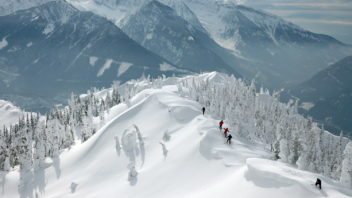
To show off his home, Hill first traverses over to sun-shaded North Bowl. Before dropping in, we stand atop a long ridge and look at the back of Mackenzie’s craggy head above. Up here, above the treeline, amidst Revelstoke’s four high bowls, the air is filled with bluish light. Shredded pennants of clouds snag on parapet ridges. There’s not a soul around. It’s all very Great White North. “Got a very alpine feel back here, even though it’s inbounds,” Hill agrees. Most of North Bowl is, well, a snow-stuffed bowl, and we’ll soon drop into powder that’s up to the third boot-buckle several days after the last dusting fell. But before that we stand along the rim of the bowl on the cusp of plenty of micro-chutes—along with several not-so-micro chutes. “It’s a great place to test your mettle,” Hill says.

If there’s anything wrong with this picture, it’s that North Bowl, like most of Revelstoke 1.0, is simply too challenging for lower-end to intermediate skiers and their families—precisely the folks who keep ski resorts alive. More than half of the mountain is rated “advanced.” Only two green runs meandered down the entire mountain last winter—if you counted the eight-mile service road from the top. To their credit, the mountain managers are working to soften the ski hill’s tough face: For this winter, a new high-speed quad will rise from the bottom of the North Bowl area and create 900 additional acres of intermediate terrain—cut runs and treeskiing—as well as 300 more acres of expert skiing and 885 added vertical feet.

Now Hill slides toward the undiscovered country of the resort’s south flank. He motions with his pole at a ridgeline hung with alpine bowls, some with tantalizing chutes. Hill names them: South Bowl, Montana Bowl, Kokanee Bowl. “That’s the Fallopian Tube, over there,” he says of one squeezed chute that tumbles toward the trees. High above, I can see a group of guys who’ve gained the ridge tossing their carcasses off a cornice.

To expand its options as a resort, Revelstoke gobbled up both Selkirk Tangiers Heliskiing and a catskiing operation, and it will run both out of the new base village. The area we’re looking at is the snowcat’s playground, Hill says. But skiers can hike to the slopes legally, and easily, from the ski resort. “If you have touring ability, the stuff you can access from here is endless—and you can wrap right around back to the lifts,” Hill says. “I call it ‘slackcountry’—little effort with maximum reward.” And skiers who don’t feel at ease can drop in right before the boundary, into spicy tree runs like Jalapeño or Hot Sauce.

We’re not set up for a big tour, but the snow is stable so we plunge in for a thousand-foot drop toward the catch-road. The subalpine fir and spruce seem to part briefly and allow us to pass before tightening up again.

Despite all the attractions of the mountain’s flanks, however, most skiers will spend their time in the center of the resort. That’s hardly a letdown: Revelstoke’s main stage is a thigh-frying wonder. The front of the pyramid, if you will, has what might be the most consistent fall line of any ski resort in North America. On their nearly 5,000-foot plunges, groomers like Snow Rodeo and Devil’s Club scarcely pause or falter. They just keep going. And going. And going. More than once—OK, a lot more than once—while bombing down these empty runs behind Hill I have to pull up short to let the riot in my legs calm down. I can only watch as he vanishes in a puff of spindrift.

The treeskiing is equally intriguing, if not yet fully realized. So much precipitation falls around Revelstoke that it’s home to the world’s only inland temperate rainforest. (Call it a snow forest: Most of that precipitation falls as snow.) The fat spruce and mountain hemlock tinseled with moss that spike runs like Separate Reality and Clyde’s Secret make for well-spaced Northwest-style glade skiing—though much more thinning is needed to make this thick-furred mountain the treeskiing sweet spot that it could be.

So many things keep reminding me of Whistler in the 80’s: runs without crowds; the vast relief between low valley and treeless bowls; the 360-degree views across a jawbone of peaks and the meringue of glaciers; the amazing nonstop skiing. I’m not alone. People keep asking, “Is this the next Whistler?” I say no, “It’s what Whistler once was”.

“It’s great for others to recognize us in comparison to Whistler, but it’s not even in our vision right now,” says Kessler. “We’ve got the town of Revelstoke right now. We don’t have to create it. It’s authentic. It’s the real deal.”

Steve Parsons, the mountain operations manager, chimes in. “We want to be the next Revelstoke.” There’s humility in both those statements, but there’s also a hint of attitude. And maybe there should be some of each. Revelstoke Mountain Resort is nowhere near Whistler right now—for better and for worse.

It’s clear that both on and off the hill the place has a far sight yet to go. Take the runs: Like its namesake plant, portions of Devil’s Club, one of the mountain’s chief runs, is prickly with slash that pokes through the snow—even in a good year. And some runs could benefit from a rolling pin; the blue-square Critical Path jogs and bounces so much as if trying to buck skiers off it. And then there’s the issue of the lack of diversity of terrain: Oddly, developers decided to wait until the resort’s second season to install a much-needed beginner chair and more novice runs that they had been considering for the middle of the mountain.

At the bottom of the hill, visitors find the beginnings of a base village—a handful of shops, as well as 56 condos in the Nelsen Lodge (an additional 200 units are scheduled to be finished by the start of this season). But the base village is only in its infant stage. This season also brings a full-service restaurant, rental shops and skier services such as a lift ticket office.

Downtown Revvie? Let’s be frank: It’s a working town that’s no charmer under winter’s snowdrifts. The place can be walked in about 20 minutes, including the street where the Royal Canadian Legion Branch No. 46 advertises the Saturday Night Meat Draw.

Curious, I ask a local what I should do for fun once night falls. “Well,” he replies, “There’s the local folk dancing.”

“What?”

“The Revelstoke Ballet,” he says.

“Huh?”

“The peeler joint,” he says, finally giving in to his grin. Ah—the strip bar.

For the next few years, skiing at Revvie will be an experience for the sport’s hard-charging early adopters—the alpine equivalent of those who bought the first iPhone. It’s an experience for the hardcore skier who isn’t concerned with niceties so much as bragging rights and some deep B.C. powder on empty slopes.

The rest of you might want to wait to give this baby a little time to gestate. But don’t worry: Given how fast change is coming, you won’t have long. ●

by Christopher Solomon

Warren Miller’s 60th Canadian Tour “DYNASTY”

Sixty years ago, an adventurous man with a pair of wooden boards strapped to his feet and an 8mm-movie camera in his hand changed the way we thought about snow. Today, Warren Miller is the most recognized name in the ski industry, and Warren Miller Entertainment® (WME) hosts the largest action sports film tour on the planet. This winter, we celebrate 60 years of filmmaking with the release of Warren Miller’s Dynasty. Fresh cinematography and immeasurable talent explodes from Dynasty, showcasing the experience, the influence, and the originality that has grown from the action sports filmmaking institution that is Warren Miller Entertainment.

From October through December 2009, Warren Miller’s Dynasty will crisscross the country on a nationwide film tour. Presented in striking high-definition, Dynasty highlights winter’s most gripping explorations and ultimate challenges…the new, the old, and the unknown…the steep, the deep, and the unthinkable. All of the action in this anniversary edition is set to an unmatched, innovative soundtrack, including music from Incubus, Silversun Pickups, and Band of Horses.

Warren Miller’s Dynasty takes you on a breathtaking global tour of China, Alaska, Norway, Colorado, British Columbia, and more. Join legendary WME athlete Chris Anthony as he treks into China’s interior on a search for the birthplace of skiing; follow mountaineering marvel Chris Davenport to Norway’s highest peaks; reunite with the pride of the Midwestern ski community, Luke and Adam Schrab; and catch a rare glimpse at historic clips from Warren Miller Entertainment’s vault of vintage footage.

When asked about Dynasty, the film’s CAnadian producer Willi Vogl said, “Warren Miller’s Dynasty reveals the past, present, and future of winter sports. It is a film that gathers the generations under one roof. It’s like a family reunion, held in neck-deep pow, with mandatory air required for entry. It leaves no snowball unturned in celebrating everyone who has, is, and will forever be a part of Warren Miller’s Dynasty.”

Warren Miller’s Dynasty will sweep the nation as a limited release, stopping in more than 50 Canadian cities, including major markets like Vancouver, Toronto, Calgary, Edmonton, Ottawa and Montreal. With screenings often running for one night only, Warren Miller films attract a cult-like following and mark the official start of winter for sports enthusiasts everywhere. Warren Miller premiers are an experience, a party, and a phenomenon not to be missed. Come and celebrate with us…60 years of breaking trail!

For show times visit: www.skitheworld.com

Abma Launches 1Step

There are certain elements needed to enjoy the great sport of skiing, like snow for example. As many of us enjoy it, we are destroying that very environment at the same time, putting the future of our sport at risk. Mark Abma has taken the first step to help create awareness and bring attention to climate change.

Mark has created an environmental advocacy group to help ski resorts and skiers reduce their carbon footprint while still encouraging people to get out and enjoy the mountains. The charity, which was launched last fall, is aptly called “One Step.” Mark is leading by example by creating environmentally conscious products with his sponsors, like his new bamboo ski with Salomon, supporting the Ekolab products at Helly Hansen, working with Dakine on more environmentally friendly gloves and backpacks, and using Smith helmets and goggles made out of recycled medical plastic. But that’s just the beginning.

New environmentally friendly materials

New environmentally friendly materials

Mr. Abma realized that a large part of his carbon footprint is driving a big truck with a couple sleds on the back, not to mention accessing terrain with snow mobiles, snow cats and helicopters. Working with Helly Hansen, The Public Works and One Step, he installed a bio diesel converter in his garage. Mark will now get oil from local Whistler restaurants like Sushi Village, take it back to his house and make his own bio diesel fuel to run his big rig. Eventually, he hopes to take this initiative to ski resorts and encouraging restaurants to donate extra oil from their deep fryers to power the areas’ snow cats.

When asked what made Abma start his advocacy group, he explained: “I was inspired to create One Step because I love the mountains and skiing and have been noticing the effects of global climate change all around me. It’s affecting ski communities all over the world and I want to create a voice and model in which we can start to make positive changes towards sustainability and a brighter, greener future.”

Mr. Abma has expressing his concerns and offered some insight. “When we connect leaving the lights on to energy shortages and pollution rising, when we connect our trash to landfills and disease, and when we connect the things that we buy and use to the places they come from, we more fully understand the importance of being mindful,” he said. “Ignoring the causes and effects of what we do and how our actions impact our world will eventually come back to haunt us. When we examine issues through an environmental lens, consciousness is raised and the opportunity for change occurs.”

Look for a lot more to come from Mr. Abma and the One Step organization. For more information visit www.onestepnow.org.

MSP Presents the In Deep Trailer

MSP Films’ new release, “IN DEEP: The Skiing Experience,” debuts on September 19th in Boulder, CO at the Boulder Theater. The teaser is live and the film is now available for pre-order at www.skimovie.com. The first 1000 pre-orders will get $5.00 off the regular DVD price, and every US order comes with a free one-year subscription to Powder Magazine.

Shooting 'In Deep'

Shooting 'In Deep'

The 2009 season gave MSP the opportunity to take an original look at the sport of skiing. “The format of the film is going to be a fresh approach for MSP this year,” said Executive Producer, Murray Wais. “We captured so much epic footage this winter, we could have put out five teasers like this.” “Haines, AK was the ultimate trip because everything came together,” added skier Eric Hjorliefson. “We had great weather, great snow, and we were able to ski everything we wanted to, which usually never happens.”

MSP was also faced with tragedy this year when long time friend and star skier Shane McConkey died in a BASE jumping accident. In this film MSP will feature a McConkey tribute segment that will highlight his incredible career as a pro skier. Each tour stop will have a contest to see who can dress up as the best Saucer Boy with prizes being given out nightly. “Shane McConkey was the greatest ski film star of our time, in addition to being an incredible person and a loyal friend. We all miss him deeply,” said Co-Founder, Steve Winter.

“IN DEEP” features the best skiers in the world including Mark Abma, Sean Pettit, Eric Hjorleifson, Daron Rahlves, Henrik Windstedt, Chris Davenport, Bobby Brown, Colby West, TJ Schiller, Mike Douglas, Kaj Zackrisson, James Heim, Hugo Harrisson, Rory Bushfield, PK Hunder, Ingrid Backstrom, Jacob Wester, Russ Henshaw, Henrik Harlaut, Alexis Godbout, Michelle Parker, JT Holmes, Sammy Carlson, Chris Rubens and Shane McConkey.

“IN DEEP” is shot in high-definition on locations in British Columbia, Italy, Haines, Sweden, Crested Butte, and additional destinations worldwide. The MSP Film Tour visits over 200 locations across the globe this fall, featuring athlete appearances, poster signings, after parties, live entertainment, and more. Please visit www.skimovie.com/tour to find out when “IN DEEP” will be at a location near you.