

ATK HY 13 Review: Market Disruptor
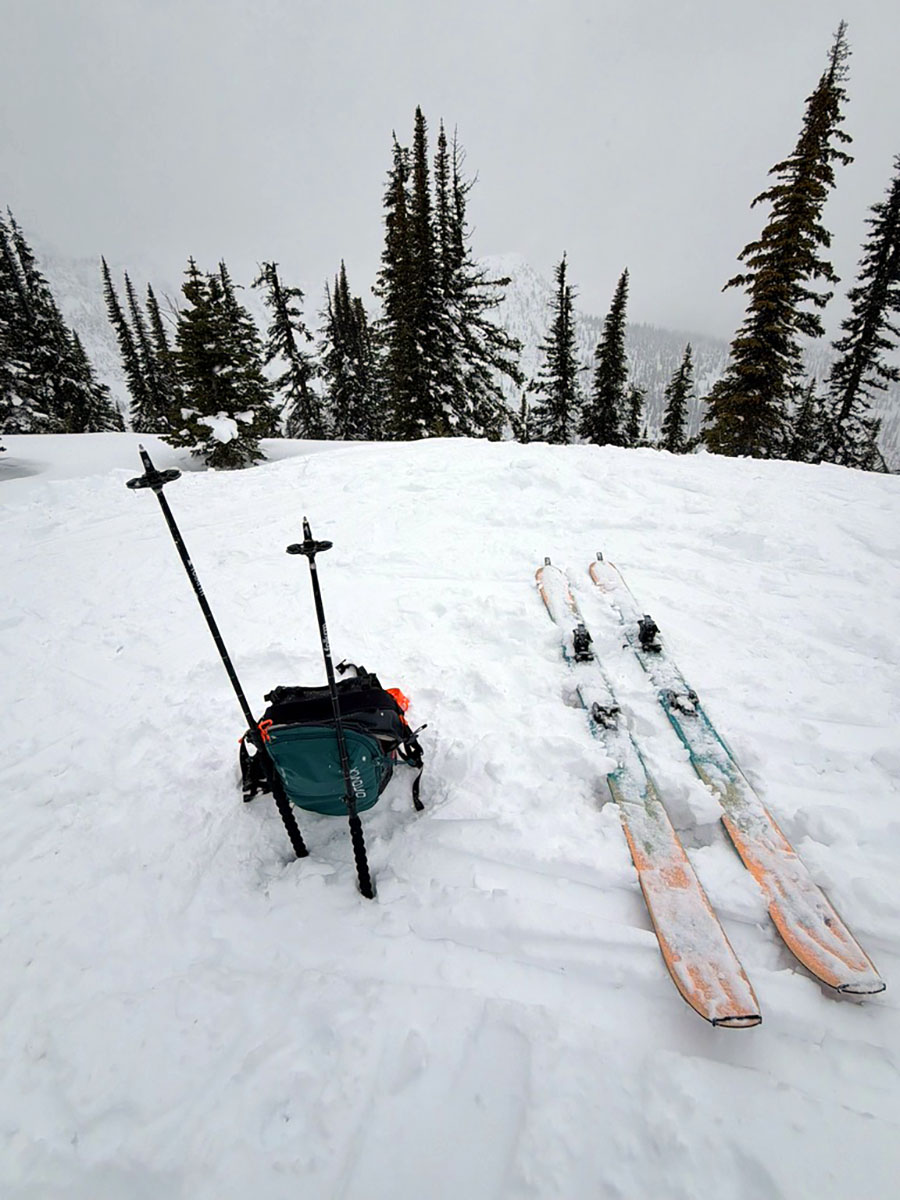
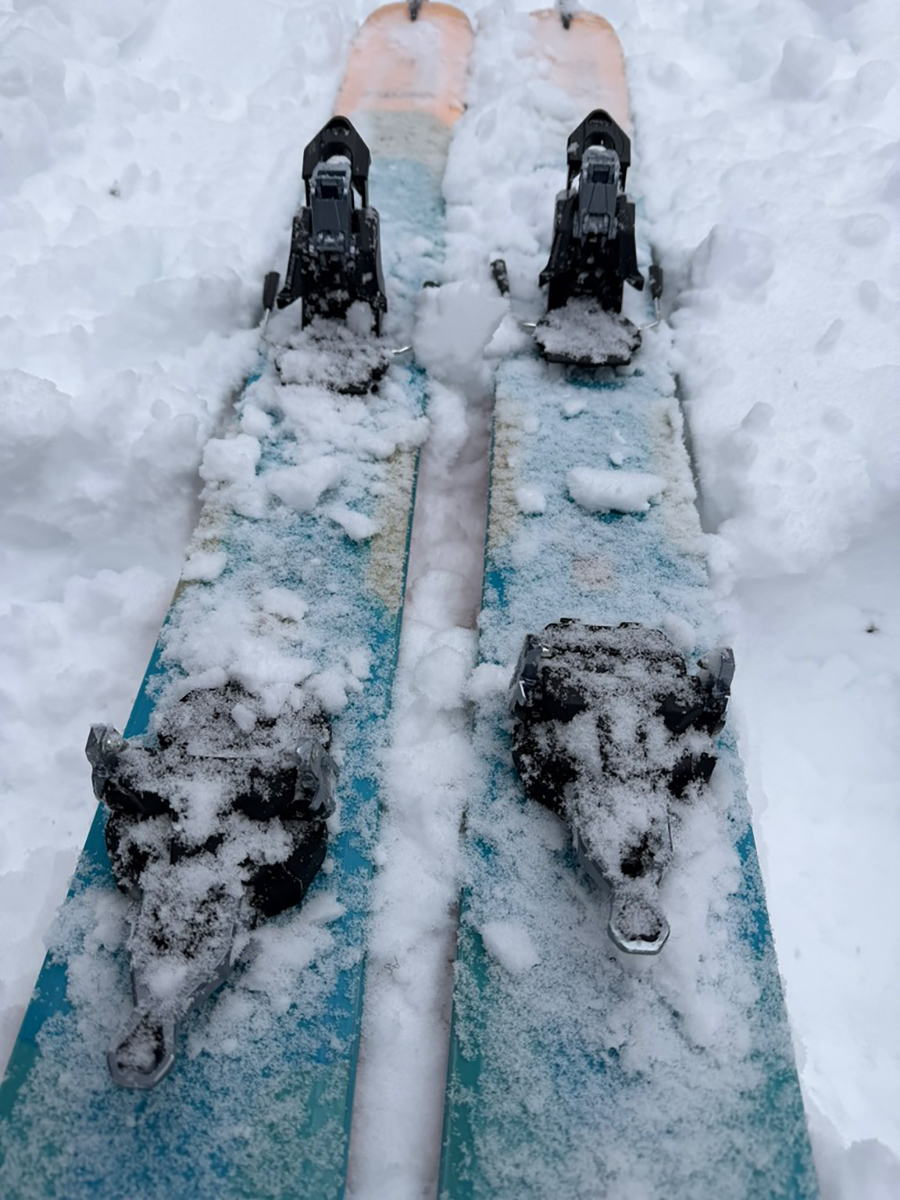
The ATK HY 13 has accomplished something I didn’t expect to see in today’s remarkably sophisticated ski binding market. It has disrupted the hybrid category, delivering the downhill performance freeskiers demand while finally addressing the weight, climbing efficiency and awkward transitions that have compromised previous designs.
I knew the very first climb that the HY 13 that ATK had produced something exceptional. The very first walk the Hy 13 felt more stable that my existing pin setup, and than I descended. That first impression has only strengthened.
Burly, industrial, solid and efficient are the words that come to mind. It’s an unusual combination for a binding weighing just 675 grams, particularly one that delivers the downhill confidence of an alpine binding.
For freeskiers who spend their winters moving between lift-served powder, slackcountry and backcountry terrain, the HY 13 changes what is possible with a single ski setup.
My first touring bindings were Raimer’s, built by Paul Raimer in the 1980s. They were lightweight but unreliable, mechanical contraptions that demanded attention and occasionally tested your patience.
I skied serious lines in the Whistler backcountry on those bindings, including the Fissile chutes. Looking back, it’s remarkable what we skied on equipment that was so primitive compared with today’s systems.
Since then, I’ve experienced the evolution of touring bindings through frame designs, early tech bindings, modern pin systems and successive generations of hybrids.
We’re now in the golden age of ski touring equipment. Pin bindings have become extraordinarily light, reliable and efficient, while downhill performance has improved substantially.
Hybrid bindings have followed a different path. Manufacturers have worked to combine alpine-style downhill retention and performance with touring capability, but the compromises have persisted.
I’ve experienced bindings that ice up and become difficult or impossible to operate, brakes that fail, small components that disappear in the snow and heel lifts that are inadequate for steep climbs. Add unnecessary weight and complicated transitions, loose pieces, and the disadvantages become obvious during a long touring day.
I had reached the point where I didn’t anticipate another binding design fundamentally changing the market.
Then I skied the ATK HY 13.
The HY 13’s downhill performance begins with its ingenious toe mechanism.
In touring mode, the binding uses conventional tech pins. For the descent, the toe assembly rotates forward through 90 degrees, moving the pins out of the way and presenting an alpine-style toe interface.
This is the fundamental difference between the HY 13 and conventional pin bindings. Rather than relying on the tech pins to retain the boot during the descent, the HY uses an alpine-style toe and heel arrangement.
The result is direct power transmission, excellent lateral support and the solid connection between boot and ski that freeskiers expect.
ATK has also incorporated adjustable lateral release at the toe, 9 mm of elastic heel travel and an adjustable anti-friction device (AFD) to accommodate compatible boot soles. These features help explain why the binding feels so composed under load.
In my experience, the downhill feel is remarkably close to a Marker Griffon. The ski responds immediately to input, and the connection feels solid and predictable.
Independent testers at Backcountry Magazine reached similar conclusions, scoring the binding highly for downhill performance and praising its power transfer and alpine-like feel.
Backcountry Magazine
The HY 13 has the substantial, industrial construction you want beneath your boots without the weight normally associated with that confidence.
The remarkable achievement isn’t simply how well the HY 13 skis downhill. Other hybrid bindings have delivered strong downhill performance.
The breakthrough is how efficiently the HY 13 tours.
With the toe assembly rotated upright, the tech pins engage the boot for climbing. The heel remains free, and the binding functions around the familiar, efficient mechanics of a pin touring system.
Unlike heavier hybrid designs, there’s no bulky frame to lift with every stride.
ATK’s distinctive negative heel position allows the boot heel to drop 18 mm below the toe reference point during the walking stride. This provides additional heel drop on flatter approaches and rolling terrain, where the geometry of some hybrid bindings can become uncomfortable.
Two additional climbing positions, +10 mm and +42 mm, provide the support needed as the skin track steepens. Together, these deliver three practical walking positions.
I’ve found the climbing mechanics stable and efficient. The binding’s height hasn’t been noticeable to me, and the three-position heel system works exceptionally well.
The ergonomics are another standout. I use my boot to move between skiing and climbing modes, avoiding the bending, reaching and fiddling that have frustrated me with other systems. The mechanism feels precise, and the transitions are exceptionally efficient.
The brake system automatically locks for touring, removing another operation from the transition sequence.
It’s an impressively integrated design, and the absence of removable conversion components is particularly welcome.
At 675 grams per binding, the HY 13 is exceptionally competitive in the hybrid category.
Compared with the Salomon Shift2 13, the HY saves approximately 450 grams per pair. That’s a substantial difference for a binding offering alpine-style downhill performance.
ATK achieves this through extensive machining of 7075 aluminum, supported by stainless steel and engineered polymer components. The result feels industrial and substantial rather than delicate.
For skiers accustomed to choosing between burly construction and uphill efficiency, the combination is impressive.
The HY 13 isn’t a minimalist touring binding, nor is it intended to compete with ultralight pin systems. Its achievement is delivering this level of downhill performance at a weight that makes regular touring genuinely attractive.
The HY 13 has attracted considerable attention from experienced skiers, and independent reviews largely support what I’ve experienced.
Backcountry Magazine awarded it Editors’ Choice recognition, with testers particularly impressed by its downhill performance, climbing ergonomics and power transfer.
A detailed review following two and a half weeks of skiing in Hokkaido reported excellent downhill performance, significantly easier transitions than the Shift and noticeable weight savings. The reviewer considered it particularly well suited to
A separate skier review based on touring around Revelstoke and Rogers Pass described exceptionally fast transitions and excellent downhill elasticity, although the reviewer preferred the Shift for predominantly resort use.
There are some reservations worth considering. Several testers have reported snow or ice interfering with the rotating toe mechanism. Individual owners have also described brake-locking problems, heel mechanism difficulties and risers that can be awkward to manipulate. These are individual reports rather than evidence of a widespread defect, but they matter for equipment used in remote terrain.
My experience with the HY 13 has been overwhelmingly positive, but a month of skiing cannot establish long-term durability or performance in every snow condition.
The HY 13 also carries a premium price, and its 6–13 adjustable release range should not be confused with DIN certification. Retailer technical information indicates that it has not received TÜV certification. Boot compatibility, AFD setup and release settings need to be checked carefully by a qualified binding technician.
The most convincing endorsement I can give the HY 13 isn’t a technical specification or another skier’s review. It’s what I’m doing with them.
I’l skiing powder days in bounds at my local ski hill, Fernie Alpine Resort, and they shred like a production DH binding. Later in the season, I travelled to Revelstoke, where my skiing included everything from lift-served powder at Revelstoke Mountain Resort to touring in the slack country and a bonus day at Rogers Pass.
For the first time ever, I was comfortable traveling with one pair of skis, without feeling compromised.
That’s significant after more than four decades of ski touring.
The HY 13 isn’t going to replace lightweight pin bindings for everyone, nor should it. There are plenty of skiers whose priorities are long approaches and minimum equipment weight.
But for freeskiers who tour to access the best snow and terrain, the priorities are different. We want a binding that climbs efficiently without changing how we ski the descent.
ATK has achieved that balance more convincingly than any hybrid I’ve used.
I expected ski touring equipment to continue improving, but I didn’t anticipate a binding that would so convincingly challenge the established hybrid designs.
The ATK HY 13 has done exactly that.
Its rotating toe mechanism, alpine-style downhill interface, low weight and efficient climbing system represent a substantial advance in hybrid binding design. The construction is burly, the skiing performance is solid and the touring ergonomics are exceptionally efficient.
There are still questions about long-term durability and icing in certain conditions, and those deserve continued attention. But the fundamental design works, and my experience has been convincing from the first day.
After skiing everything from Paul Raimer’s early bindings to the latest touring technology, I believe the ATK HY 13 has earned its place as a genuine market disruptor.
Editor






Comments