

NOAA Forecasts Very Strong El Niño: Where Will the Powder Fall This Winter?
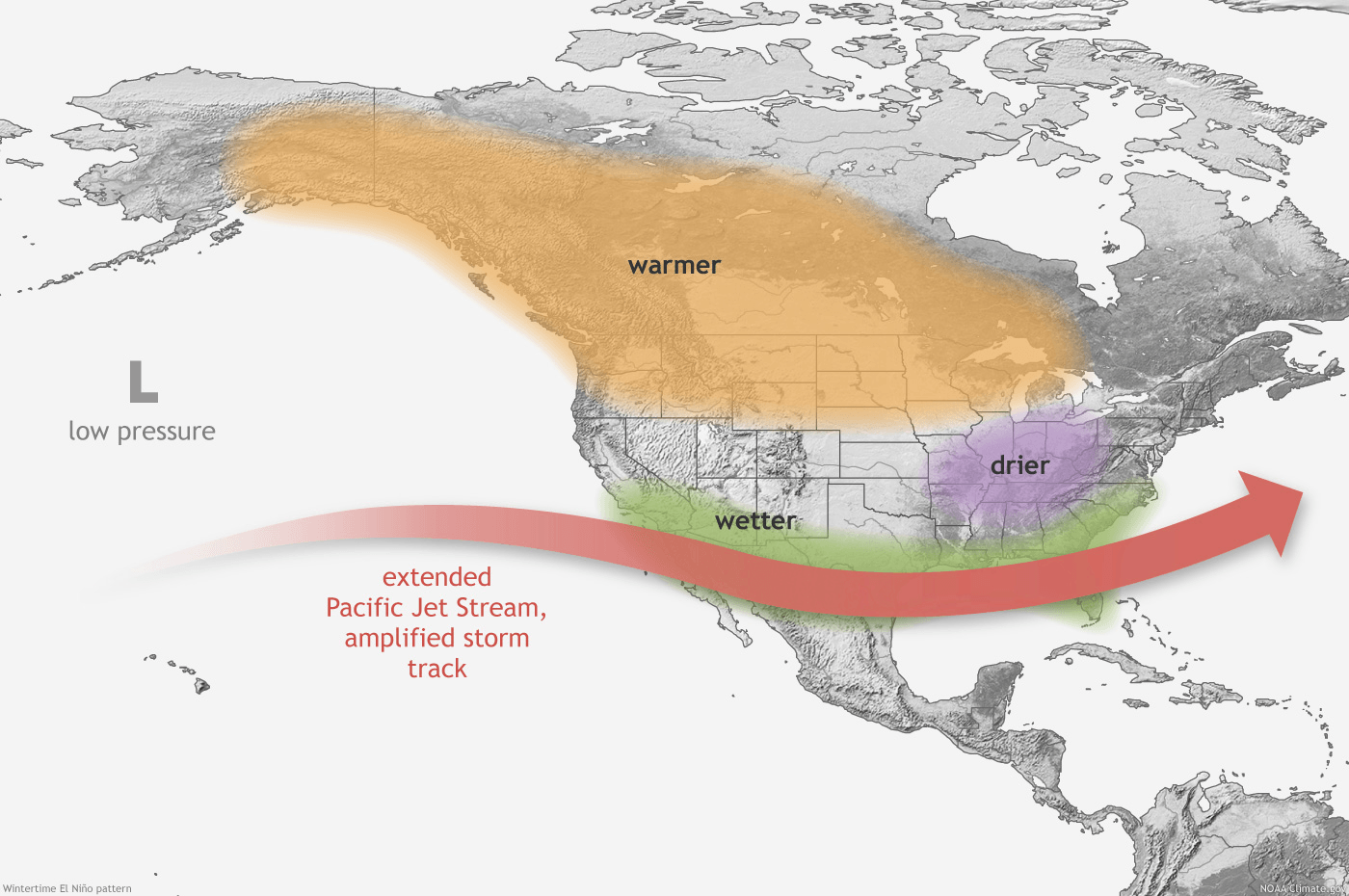
NOAA is forecasting a very strong El Niño for winter 2026–27, raising the big question for skiers and riders across Western Canada: where will the powder fall?
The latest NOAA Climate Prediction Center update confirms that El Niño conditions are now present and are expected to strengthen into the Northern Hemisphere winter. NOAA gives the November–January period a 63% chance of reaching “very strong” El Niño status, a level that could rank among the largest events in the record going back to 1950.
For powder hunters, that matters because El Niño often changes the position and strength of the Pacific jet stream. During El Niño winters, the Pacific jet typically shifts south, which can favour stormier conditions farther south while leaving parts of Western Canada and the Northern Rockies warmer and drier than average. NOAA notes that the northern U.S. and Canada are often warmer and drier during El Niño winters, while the southern U.S. tends to become wetter.
That does not mean the Powder Highway is cancelled.
Every El Niño is different. NOAA cautions that even very strong events do not guarantee the expected impacts everywhere. Stronger events can tilt the odds, but mountain weather still depends on storm-track timing, Arctic air outbreaks, local terrain, freezing levels and short-term atmospheric patterns.
The Snow Line Is the Story
For Western Canada, the most important issue may not be whether storms arrive. It may be where the snow line sets up.
A warmer El Niño pattern can raise freezing levels, especially on the coast and in lower-elevation interior valleys. That can mean more rain at valley bottom, heavier snow at mid-mountain, and better conditions at higher elevations. For ski areas with strong alpine terrain, the season can still deliver excellent storm cycles when colder air and Pacific moisture overlap.
The risk is a pattern that sends moisture too far south or keeps temperatures too warm. The opportunity is a winter where the storm track brushes the coast, southern Rockies, interior B.C., while colder windows still line up with deep Pacific systems.
What It Could Mean for Powder Canada
For Canadian skiers, the early signal suggests a winter to watch carefully rather than one to write off.
The classic El Niño setup often leans warmer and drier across much of Western Canada, but the strongest powder windows may come from short, high-impact storm cycles rather than a steady La Niña-style northwest flow. Southern B.C., the Kootenays, Alberta’s southern Rockies and cross-border destinations could all benefit if the jet stream drops south but still delivers enough moisture and cold air into the mountains.
The best strategy this winter may be flexibility: follow freezing levels, watch storm timing, and be ready to move when the pattern lines up.
What Is RONI?
NOAA is now using the Relative Oceanic Niño Index, or RONI, to help classify ENSO strength. RONI measures sea-surface temperature departures in the Niño-3.4 region of the equatorial Pacific, but it does so relative to the broader tropical ocean background. NOAA says its strength probabilities are verified using RONI thresholds, including the “very strong” category at +2.0°C or higher.
That matters because the global ocean is warmer than it used to be. RONI is designed to help forecasters better separate the El Niño signal from the warmer background climate.
How much Powder?
NOAA’s current forecast points to a potentially historic El Niño winter, but the powder outcome is still not locked in.
A very strong El Niño typically raises the odds of warmer, drier conditions across Western Canada, especially compared with a strong La Niña winter. But mountain snow is never that simple. The season will likely come down to storm-track position, freezing levels and how often colder air can meet Pacific moisture.
For Powder Canada readers, this is a winter to watch closely. The hype is real, but so is the uncertainty. When the snow line drops and the southern jet lights up, the best days could be very good.




Comments