

Christina “Lusti” Lustenberger Survives K6 Avalanche That Killed Partner Guillaume Pierrel
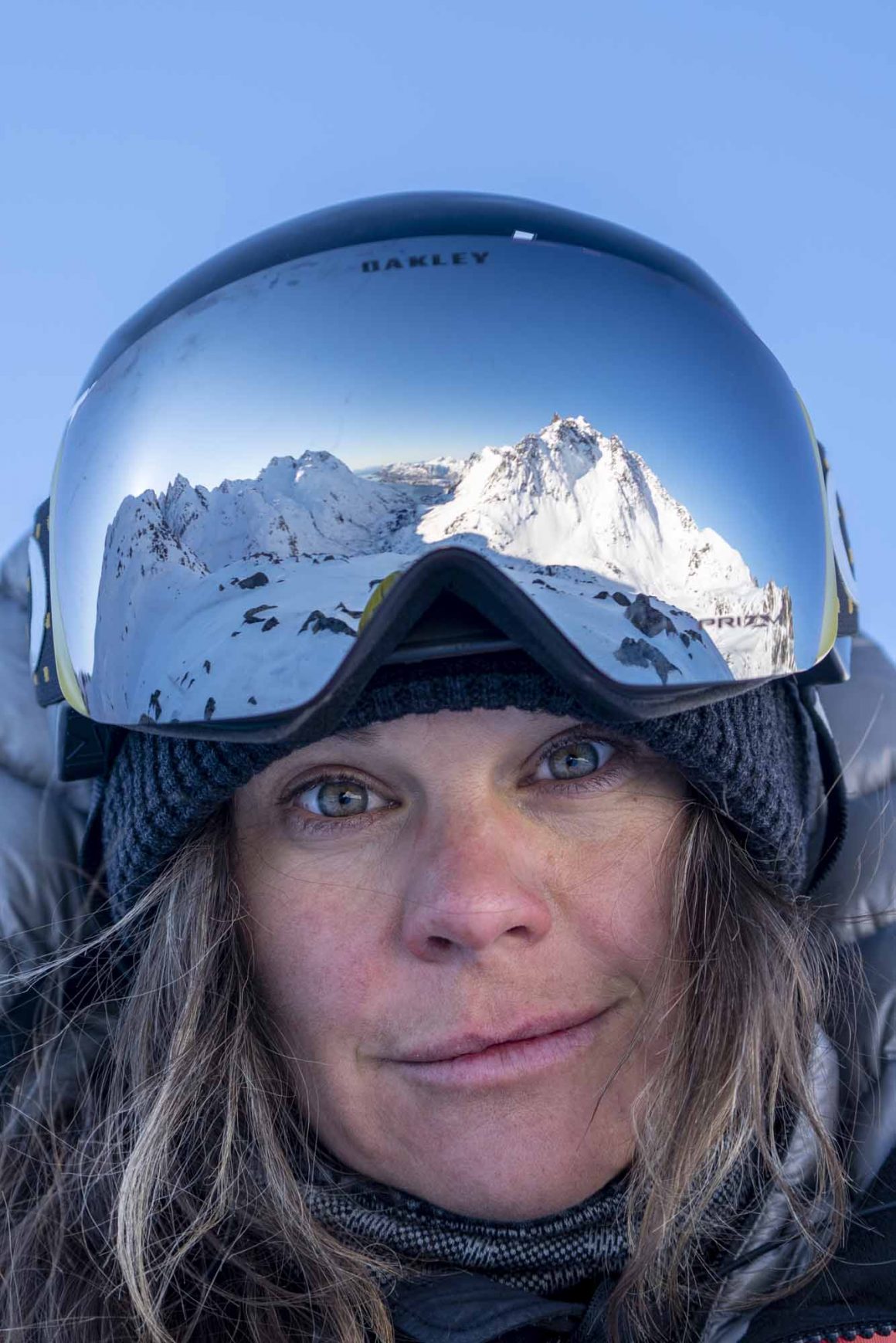
Canadian ski mountaineering icon Christina “Lusti” Lustenberger has survived an avalanche on K6 in Pakistan’s Karakoram Range that killed Guillaume “Gee” Pierrel, her partner in life and one of the world’s most respected steep skiers.
Pierrel, a French mountain guide, alpinist and extreme skier, died on June 24 while attempting to climb and ski K6, a 7,282-metre peak in the Karakoram. Lustenberger and French skier-alpinist Boris Langenstein survived the slide and were later reported safely back at base camp.
The tragedy has shaken the international ski mountaineering community. Pierrel was widely respected for his strength, technical ability and bold approach to high-consequence alpine terrain. For Canadians, the loss is especially close because of his deep connection to Lustenberger, one of Canada’s most accomplished mountain athletes.
Pierrel was not simply a member of Lusti’s expedition team. He was her partner in life, in the mountains and in some of the most important ski mountaineering objectives of their generation.
A Partnership Built in the Biggest Mountains
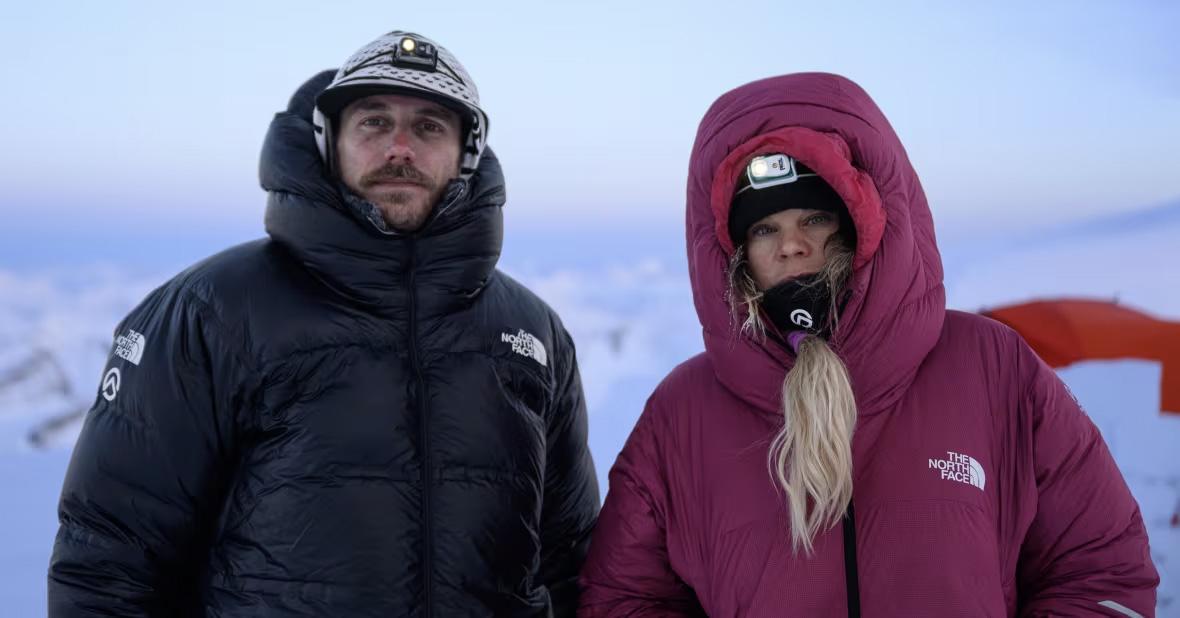
Together, Lustenberger and Pierrel formed one of the strongest ski mountaineering partnerships in the world. Their relationship was built around trust, shared judgment, technical mastery and a willingness to pursue beautiful, difficult lines in the most serious alpine terrain on earth.
In February 2025, the pair completed the first ski descent of Mount Robson’s south face, one of the most significant ski mountaineering achievements in Canadian history. Mount Robson, the highest peak in the Canadian Rockies, had long stood as a dream objective for Lustenberger. With Pierrel, she finally found the right partner for the mountain.
The Robson descent was more than a major first. It showed the depth of their partnership. They climbed and retreated when conditions demanded patience, then returned and completed the line when the mountain allowed passage. That mix of ambition, restraint and trust defined their approach.
Their shared objectives also extended beyond Canada. Pierrel and Lustenberger were part of a new generation of ski alpinists pushing the boundaries of what could be climbed and skied, from the Alps to New Zealand to the Karakoram.
K6 was another mountain in that world: remote, high, complex and dangerous.
Lusti’s Place in Canadian Mountain History
Christina “Lusti” Lustenberger is not just a professional skier. She is a Canadian mountain icon.
Raised in British Columbia, Lustenberger first made her name as an alpine ski racer. She raced for the Canadian Alpine Ski Team and represented Canada at the 2006 Winter Olympics in Turin. After her ski racing career, she redirected that elite technical foundation into the far less controlled world of ski mountaineering.
That transition has become one of the great stories in Canadian skiing.
Lustenberger moved from race courses and gates into remote alpine faces where success depends on much more than skiing talent. In high mountains, speed is only one part of the equation. Judgment, climbing skill, snow assessment, patience and humility matter just as much.
Over time, Lusti became an ACMG-certified ski guide and one of the most respected steep skiers in the world. She is known for precision rather than self-promotion, for mountain craft rather than hype, and for choosing objectives that require complete commitment from the entire team.
Her career has helped redefine Canadian ski mountaineering. She has shown that Canadian skiers can lead at the highest level internationally, not only as athletes but as decision-makers in serious alpine terrain.
From Great Trango to Robson
Before K6, Lustenberger had already made history in Pakistan.
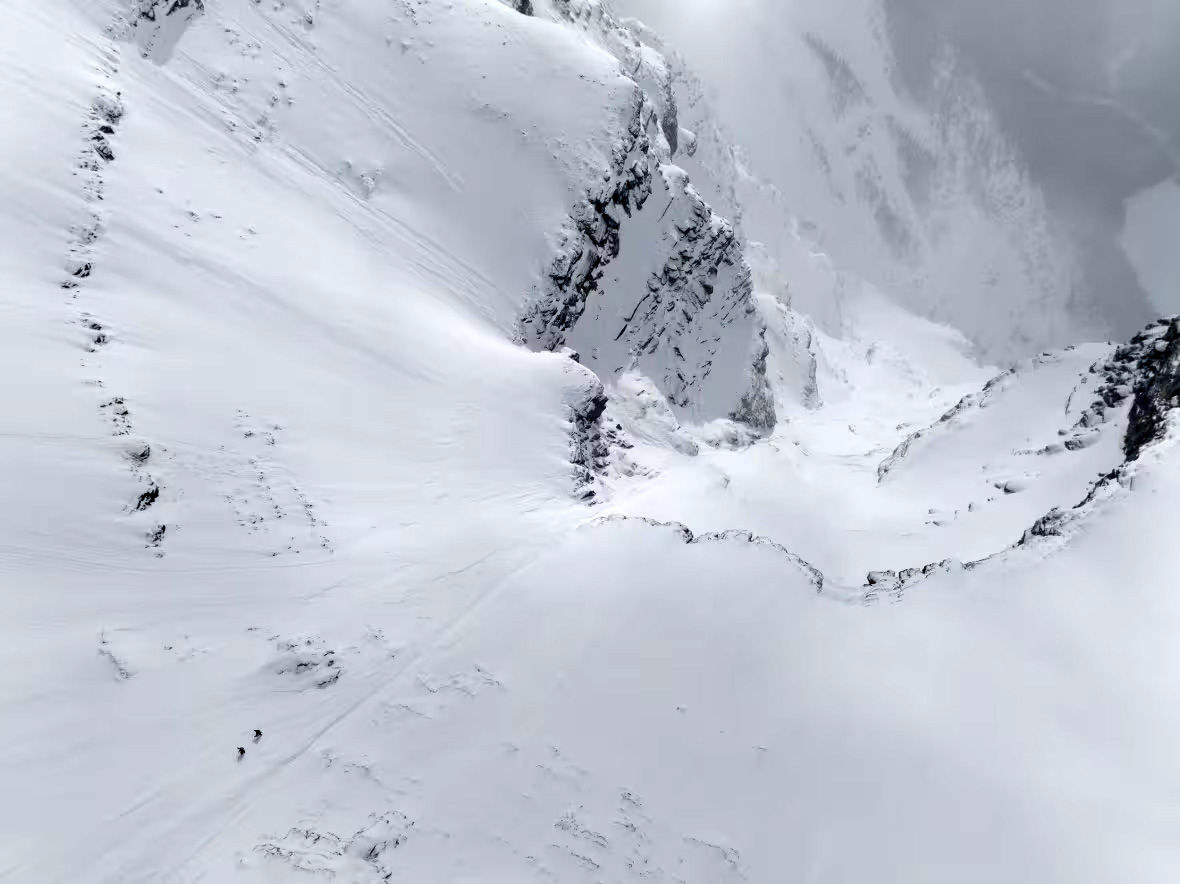
In May 2024, she joined Chantel Astorga and Jim Morrison on the first ski descent of Great Trango Tower’s west face, a 6,286-metre Karakoram giant. The descent was widely recognized as one of the most important ski mountaineering achievements of the decade.
That expedition placed Lustenberger at the centre of a new era of high-end ski alpinism: small teams, major faces, complex climbing and skiing in remote ranges where the consequences are absolute.
Then came Mount Robson with Pierrel in 2025.
For Canadian skiers, Robson carries a special weight. It is the highest peak in the Canadian Rockies and one of the country’s most iconic mountains. Lustenberger and Pierrel’s first descent of the south face was a landmark moment, and it further cemented Lusti’s place among the most accomplished ski mountaineers Canada has ever produced.
It also placed their partnership in the spotlight. They were not chasing easy objectives. They were choosing mountains that demanded imagination, patience and complete trust.
The Mountain: K6 in the Karakoram
K6, also known as Baltistan Peak, rises to 7,282 metres above Pakistan’s Hushe and Charakusa region. Though lower than nearby 8,000-metre giants, K6 is not a lesser objective. It is steep, glaciated, remote and exposed to severe avalanche and objective hazard.
The Karakoram has drawn increasing interest from elite ski mountaineers, but it remains one of the world’s most serious mountain ranges. Storms, altitude, warming cycles, unstable snow, complex glaciers and remoteness all compound the risk.
Early reports indicate Pierrel was caught by an avalanche of snow and rock while the team was on the mountain. Lustenberger and Langenstein survived and returned to base camp.
The full details of the accident will take time to emerge. What is clear is that the team was operating in serious terrain on a major Himalayan-scale objective when the slide occurred.
A Devastating Loss
Guillaume Pierrel’s death is a profound loss to the mountain world.
He was part of a rare group of skiers capable of moving through the steepest and most technical mountain terrain with confidence, creativity and control. His achievements with Lustenberger, including Mount Robson, will remain part of ski mountaineering history.
But this loss is also deeply personal.
For Lustenberger, Pierrel was her life partner and expedition partner. The mountains they climbed and skied together were not simply professional projects. They were shared dreams, shared risks and shared chapters in a life built around the alpine.
That makes the tragedy on K6 especially painful. One of Canada’s greatest ski mountaineers has survived an accident that took the person closest to her in the mountains and in life.
Canada’s Respect for Lusti
Lustenberger’s survival will be met with relief across Canada’s ski community. Her grief will be met with deep respect.
Lusti has become an icon because she represents the highest values of mountain skiing: skill, courage, humility, preparation and restraint. She has carried Canadian skiing onto some of the world’s most serious faces and done it with quiet excellence.
Her story has never been about celebrity. It has been about craft.
From Olympic ski racing to ACMG guiding, from Great Trango Tower to Mount Robson, Lustenberger has built a career defined by substance. She has inspired Canadian skiers not only by what she has skied, but by how she has approached the mountains.
Now, the ski world mourns with her.
K6 was an ambitious objective for an extraordinary team. Guillaume “Gee” Pierrel did not come home. Christina “Lusti” Lustenberger did.
Canada will be grateful that Lusti survived. But the moment belongs first to grief, to respect and to remembering Pierrel as a remarkable skier, alpinist, guide and life partner whose legacy is now inseparable from some of the great ski mountaineering achievements of our time.





Comments