

The Kicking Horse Gondola Report and the Myth of “It Was Just a Fluke”
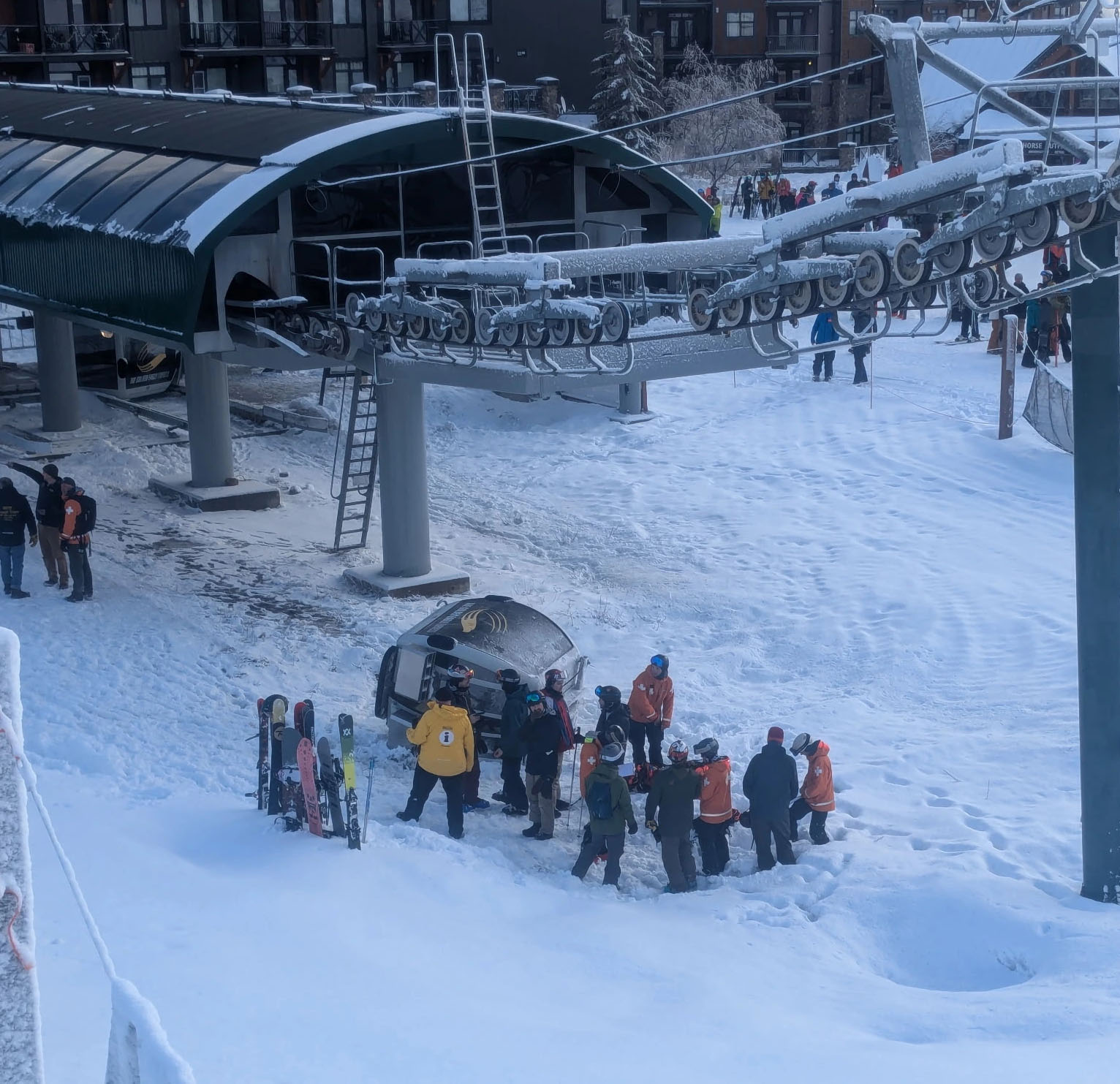
The Kicking Horse Gondola Report doesn’t tell a story of chaos or carelessness. It tells a story of margins — and how margins quietly shrink.
There’s a temptation after incidents like this to look for one dramatic failure. A missed inspection. A reckless shortcut. A catastrophic defect.
That’s not what happened.
What happened was more subtle — and more instructive.
The steel used in that hanger arm wasn’t specified for cold-weather toughness the way it likely would be today. The way it was bent and galvanized decades ago made the inside of the curve more brittle than anyone fully appreciated. Over time, cabins occasionally struck station structures during windy entries — not dramatic collisions, but real impacts. And the inspection system, built around reasonable expectations of how cracks normally behave, never caught the flaw before it reached a critical size.
No single one of those facts guarantees failure.
But together?
Together they tightened the safety margin year after year.
Until one morning, there was no margin left.
That’s the uncomfortable truth.
This Wasn’t a Scandal. It Was a Convergence.
The report calls it an “unlikely convergence.” That phrasing matters.
Because it reminds us that modern lift safety is built on layers — engineering strength, inspection frequency, operational discipline. Each layer assumes the others are performing within expected ranges.
Here, the material didn’t behave quite the way the system assumed it would. Brittleness shortened the warning period between “small crack” and “catastrophic fracture.” Inspections were performed — and even exceeded minimum code frequency — but the window between detectability and failure may have been narrower than anyone realized.
That isn’t villainy.
It’s physics.
Perhaps the most sobering detail is that a majority of hanger arms showed signs of past impacts with station structures.
For years, those impacts were part of operational life — adjustments were made, alignment was improved, repainting monitored contact points.
But the report makes clear: severe impact loading likely accelerated the crack in this arm.
That changes how the industry has to think about “hard hits.”
Not as nuisances.
Not as maintenance items.
As structural events.
And that shift in mindset is one of the most important outcomes of this investigation.
What Should the Public Take From This?
First: this was not an industry-wide systemic failure. Additional testing of similar lifts did not uncover widespread cracking.
Second: the regulatory system did not hide. It investigated deeply, brought in independent labs, analyzed metallurgy, stress modelling, fracture progression. It published uncomfortable findings.
That transparency matters.
Lift safety isn’t about pretending nothing will ever fail. It’s about tightening margins when they’re exposed.
And this report does exactly that.
The real lesson from Kicking Horse isn’t fear.
It’s humility.
Even well-designed systems can drift toward thinner margins if assumptions go unchallenged. Materials evolve. Standards improve. Operational realities accumulate.
The industry now has clearer guidance: specify tougher materials, scrutinize cold-bent components, treat impacts seriously, reconsider inspection intervals where brittleness may exist.
That’s progress born from discomfort.
And in a province that depends on ropeways every winter, discomfort that leads to better standards is not weakness.
It’s strength.
Source: Incident Investigation Report – Kicking Horse Gondola, Technical Safety BC, February 2026.




Comments