

Deep Persistent Slab Danger Warning
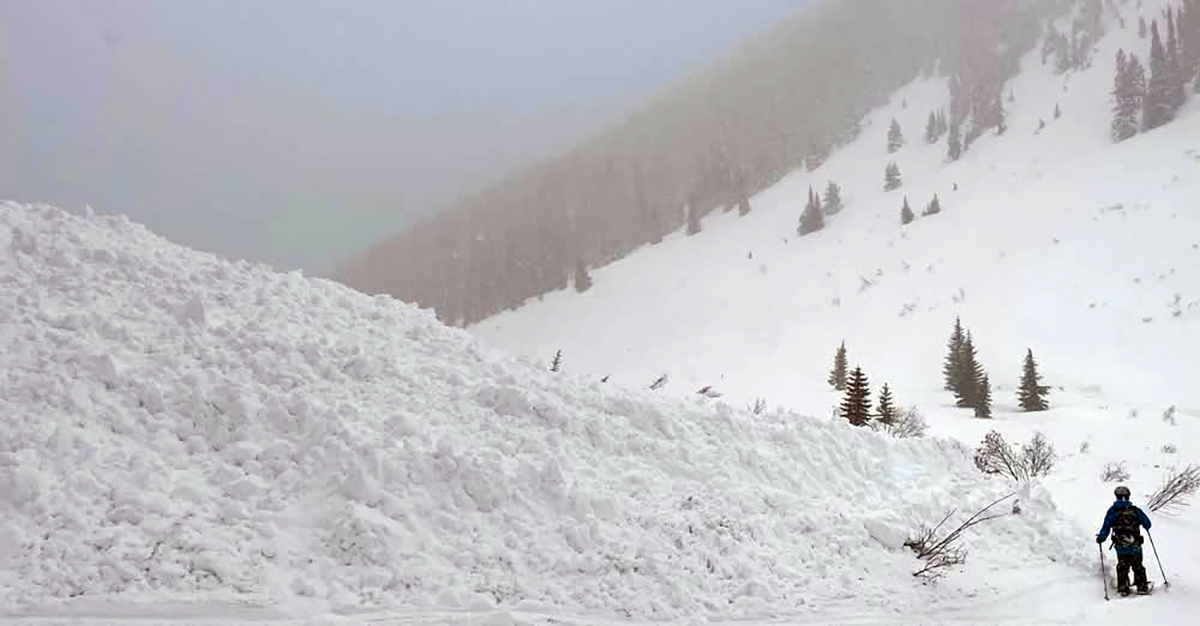
The current Deep Persistent Slab Danger Warning from Avalanche Canada, supported by observations shared through the Association of Canadian Mountain Guides and field reporting from Parks Canada, points to a structural weakness in the snowpack that remains reactive across parts of Western Canada.
Recent avalanche activity in Rogers Pass illustrates the scale of the problem. On February 27, several size 3.5–4.0 avalanches ran full path in the Asulkan and Connaught drainages. In the Asulkan Valley, avalanches originating from Rampart Peak and Mount Abbott reached valley bottom and extended into timber on the opposite side. In the Connaught Valley, Cheops North 4 and the Grizzly Slide Path also ran full path, crossing creeks and burying established skin tracks. Debris depths were reported in metres.
These avalanches were associated with a persistent weak layer formed January 26, now buried approximately 100–150 cm below the surface and recently loaded by significant precipitation and strong southwest winds. The hazard was rated High at the time, and Winter Permit Areas were closed. While natural avalanche activity is expected to decrease as loading eases, both Parks Canada and Avalanche Canada note that human-triggered avalanches remain likely.
Persistent slab problems require a different mindset than storm slabs. They can propagate widely across slopes, step down deeper than expected, and in some cases pull back into lower-angle terrain. Remote triggering is possible. Warning signs are not always obvious prior to failure. As a result, terrain management becomes the primary tool for risk reduction.
Under a High rating, avoiding avalanche terrain is straightforward guidance. Under Considerable, where human-triggered avalanches are still likely, disciplined terrain selection is critical. That means maintaining conservative slope angles, minimizing exposure to overhead hazard, avoiding runouts and connected terrain features, and recognizing that the absence of recent natural activity does not confirm stability.
The central issue is structural, not cosmetic. Surface conditions may appear settled, but a buried weak layer capable of producing large avalanches remains present in some regions. Until that layer gains strength or is no longer reactive, conservative decision-making remains the most reliable approach.
Sources:
Avalanche Canada public avalanche bulletins, February 27, 2026.
Association of Canadian Mountain Guides and Parks Canada Mountain Safety report, Rogers Pass, February 27, 2026.




Comments