

Dynafit Carbon 14: Will It Stand Up?
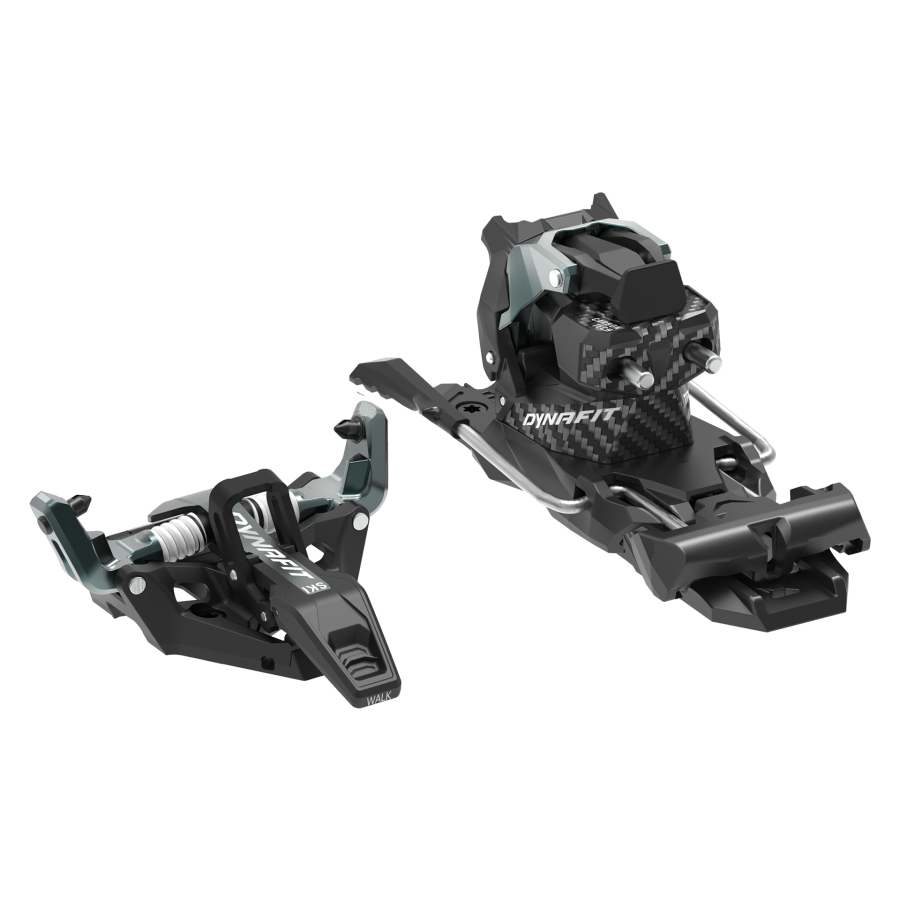
The new Dynafit Carbon 14 ski touring binding challenges conventional thinking about carbon construction in backcountry equipment. Weighing 335 grams per binding and offering a release range of 7–14, Dynafit is targeting aggressive, downhill-oriented backcountry skiers.
Announced for the 2027/28 winter season, the Carbon 14 incorporates laminated carbon technology that Dynafit claims is significantly stiffer and more durable than aluminum.
It’s a bold claim, but will it stand up to the abuse of skiing hard in the backcountry?
Carbon Meets Freeride
The Carbon 14 builds on the technology introduced with Dynafit’s Blacklight Carbon Pro binding, moving carbon construction beyond the speed touring category and into more demanding freeride applications.
The new binding retains an aluminum toe piece with ice-clearing pins, while the heel incorporates laminated carbon, reinforced springs and dynamic length compensation.
A new freeride spacer supports the boot heel, with Dynafit claiming a 27% improvement in power transmission.
At 335 grams, including brakes, an adjustment plate and a freeride spacer, the Carbon 14 is competitive with existing aluminum freeride bindings.
ATK’s Freeraider 14 SL weighs 355 grams, while its Freeraider 15 EVO weighs 395 grams and offers a release range of 7–15. Both utilize high-strength 7075 aluminum.
The question is not whether Dynafit can produce a lightweight freeride binding, but whether carbon offers a meaningful advantage over aluminum.
Who Is the Dynafit Carbon 14 Designed For?
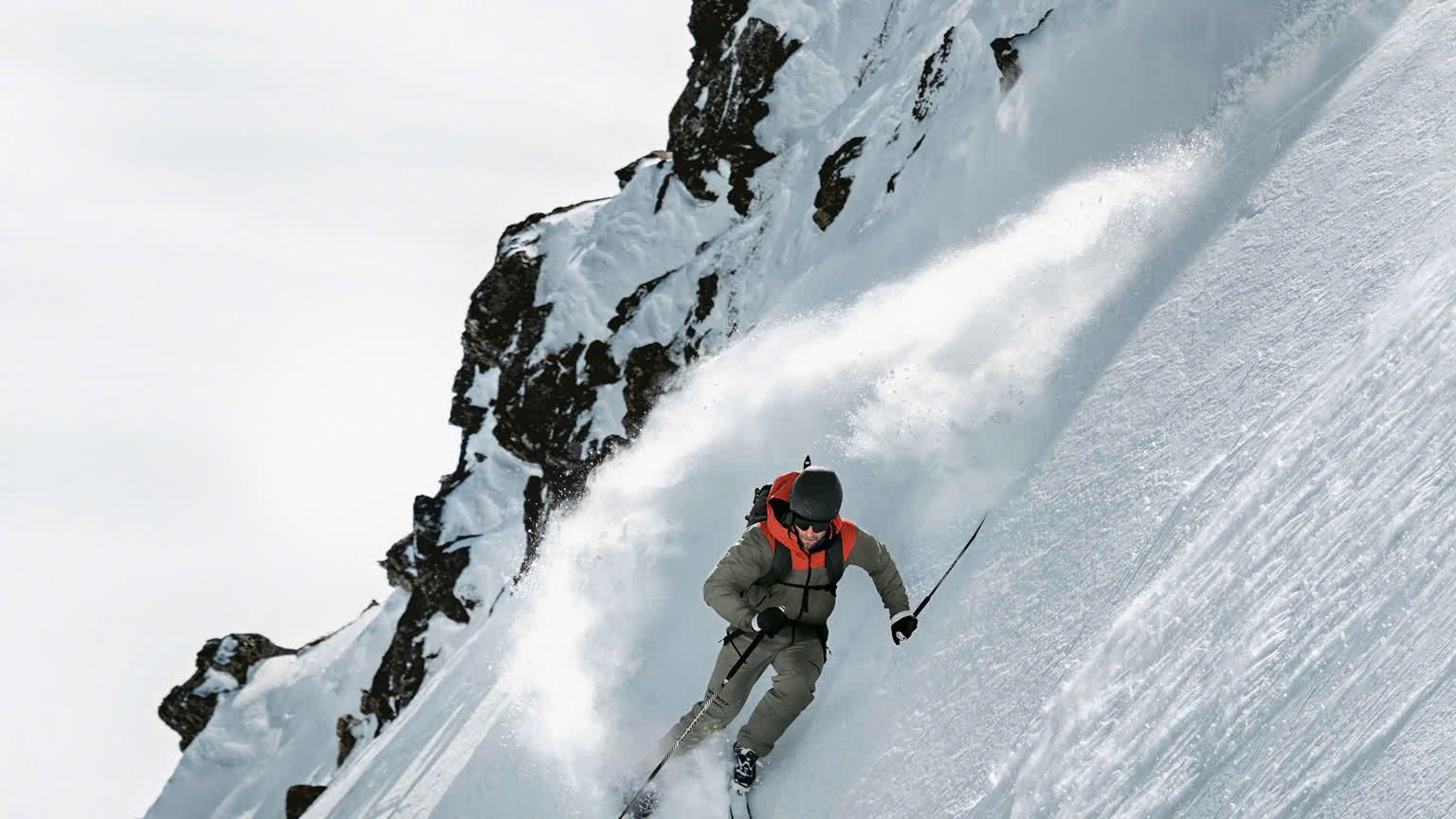
This isn’t a binding for counting grams on the skimo circuit. Dynafit is targeting experienced, descent-focused ski tourers who ski aggressively and drive wider skis through challenging terrain.
Heavier and more powerful skiers looking for a dedicated backcountry binding may be particularly interested.
For skiers accustomed to robust freeride and hybrid bindings, the Carbon 14 presents an interesting alternative. However, a release value of 14 does not necessarily equate to the elasticity, retention or impact resistance of an alpine binding.
Will Carbon Stand Up to BC Abuse?
British Columbia’s backcountry provides an unforgiving testing environment. Deep coastal snow, Kootenay storm cycles, buried timber, rocky alpine terrain, frozen avalanche debris and aggressive skiing on wide powder skis all place significant demands on binding components.
Carbon fibre has proven itself in downhill mountain biking, where components are engineered to withstand enormous forces and repeated impacts. Developments in mountain bike technology helped inspire Dynafit’s move into carbon binding construction.
However, stiffness, tensile strength, fatigue resistance and impact tolerance are distinctly different properties.
While aluminum can deform under excessive loads, laminated carbon can suffer internal damage or delamination that isn’t immediately visible. The design, fibre orientation and manufacturing process are critical to its performance.
How the carbon heel assembly withstands repeated shock loads, lateral forces, accidental impacts and prolonged exposure to extreme winter conditions will be particularly interesting.
Long-term durability, release consistency and structural integrity are non-negotiable when you’re several valleys from the trailhead.
Dynafit Carbon 14 Specifications
Weight: 335 grams per binding
Release range: 7–14
Construction: Laminated carbon, carbon composite, forged aluminum, steel and synthetic materials
Brake widths: 75, 90, 105 and 120 mm
Boot length adjustment: 20 mm
Walking positions: Three
Crampon compatible: Yes
Manufactured: Germany
Availability: 2027/28 winter collection
Is Carbon the Future of Freeride Touring Bindings?
Dynafit is challenging the established use of aluminum in high-performance touring bindings. Its claim that laminated carbon is both stiffer and more durable than aluminum deserves attention.
If carbon can deliver superior structural performance, greater durability and consistent release characteristics under aggressive skiing loads, Dynafit could establish a new direction in binding construction.
But the material needs to prove itself beyond laboratory testing and manufacturer claims.
A season of hard charging in British Columbia’s backcountry would be a good place to start.
For more information, visit Dynafit.



Comments